Sweet like chocolate: Swiss-style Champions League league phase nears conclusion but what have we learned?

Ahead of next week’s fixtures in the catchily-titled Champions League League Phase, we find ourselves five-eighths of the way through the new “Swiss-style” model, making now as good a time as any to review its impact so far.

Prior to the new format being rolled out this season, there was much consternation and gnashing of teeth about what it might bring: the huge new table, more fixtures and almost certainly heavier defeats for the European game’s “lesser” lights.

As it turns out, that hasn’t really been the case. There have been some hefty drubbings dished out, such as Bayern Munich’s 9-2 win over Dinamo Zagreb on matchday one or Borussia Dortmund crushing Celtic 7-1 on matchday two, but on the whole, there have actually been more surprise scorelines than might have been expected.

Results such as Monaco beating Barcelona 2-1 (although Barça’s recent travails made that one not a huge shock), Lille claiming the scalps of both Madrid sides on consecutive matchdays or Sporting overcoming the loss of head coach Ruben Amorim to beat Manchester City 4-1 on matchday four.

It is still hard to predict the final outcomes of the 36-team super-table, but it is clear that some clubs have struggled to meet their historical best – specifically Manchester City, Real Madrid and PSG, with the Parisians looking to be in the most peril.

However, with three games still to play, it is still hard to see all three clubs not making their way through to the knockout stage, even if they find themselves in the play-off stage rather than leapfrogging straight to the final 16.

PSG look at most risk, but with games to come against RB Leipzig, who are set to be the League Phase’s biggest casualties, Manchester City and Stuttgart, who have also underperformed, seven more points looks plausible, which would mean 11 for the final standings and probably a play off spot.

Meanwhile, for Madrid and Manchester City, the competition’s last two winners, of course, a further five points should do the job. Madrid do have to face Italian league leaders Atalanta in their next fixture, but with points already in the bag and games against RB Salzburg and Brest, currently defying expectations in 11th spot, they should be ok. Same goes for City, who despite a terrible run of form domestically should still progress comfortably – they have 8 points to their name and games coming up against Juventus, PSG and Club Brugge.

So while Liverpool, with five wins from five, peer down from the top of Mount League Phase, what does this all tell us? Well, not much more than the previous format, in all honesty.

We’re still most likely to see the “biggest” clubs in the knockout phase, despite the odd travail and  blooded nose along the way. Even if there is a surprise elimination at this stage, that happened in the past too – just last year, we all chuckled heartily at the ongoing malaise at Old Trafford as Manchester United came last in their group. Milan, Newcastle and Sevilla were also among the list of clubs from the big five leagues that failed to make the knockout stages.

If anything, the new format has killed off the previous format’s most egregious failing – that which saw group stage failures rewarded with a parachute into the knockout stages of the Europa League. This at least makes the second and third tier competitions ‘cleaner’ – no last-minute super club additions to swoop in and steal the silverware. Or Sevilla, just for a change.

There is also the argument that more teams in this pre-knockout phase has meant more opportunities for “smaller clubs”, with teams such as Dinamo Zagreb, Club Brugge and – with apologies for highlighting Scottish football’s place in the world – Celtic in with a chance of making it through. However, getting to the play-off round is in effect the same as making the final 32 (ie, a play-off to reach the round of 16), so all the new format is doing is eliminating an extra four teams, which at the moment are likely to be Young Boys, Slovan Bratislava, RB Leipzig (all on zero points) and Bologna (one point).

Should those faltering big clubs make the play-off round, they will then face a two-legged tie against one of the other teams outside the top eight. This play-off is seeded, with the teams from 9-16 drawn against opponents from 17-24, so based on current standings Madrid could face Milan, Benfica or Bayern – or they could be paired with Lille or Brest, who have already sprung surprises in this competition.

This kind of proves the point that this complicated league phase has changed nothing – the competition only really gets going when it reaches the knockout phase, bringing with it the element of unexpected clashes that really matter, with no safety net for underperforming losers.

Instead, all we have really seen from the bloated group stage is more ultimately meaningless encounters between the biggest and richest. So far we have seen Inter beat Arsenal, Barcelona beat Bayern heavily and Liverpool win at Milan, but so what? None if it matters at this stage.

It’s all just the biggest clubs swelling their already stuffed coffers with more cash. More matches as content and more eyeballs and flashy social media highlight reels.

Any stories that have been created so far have centred around negative narratives associated with the names we already know – Mpabbé’s struggles in Madrid, Guardiola’s head-scratching at underperforming City or Slot’s machines taking the table by strorm. There has been practically zero spotlight for Monaco, riding high in 8th, or Brest punching well above their weight. It would have been fantastic to learn more about clubs making headlines like this, but there’s no oxygen for them among all the noise of the big boys chasing clicks.

No one is suggesting that the previous format was loved and created endless classic clashes – the truth instead was a bundle of dead rubbers towards the end of the group stage and maybe one or two games that really mattered. But at least it was over sooner – this seemingly endless League Phase will still be live in the last week of January, meaning extra complication as the transfer window creeps towards slamming shut.

The previous format felt like what it was: a preliminary series of fixtures that ultimately weeded out the sides expected to be eliminated while also creating revenue and security for the biggest clubs. By contrast, the new format does this too, but with less clarity, more meaningless games and with greater threat to the rest of football, portending towards the inevitable European Super League, where inconsequential mid-table clashes between Atleti and Juventus will be the norm while also further distorting domestic leagues by channeling funds to only one club from countries like Denmark, Belgium or Slovakia.

Knockout football always was and always will be the great leveller in football; any team can beat any other on the right day and in the right circumstances, even over two legs. Minimising that format in favour of an expanded league system reduces the risk, creating more opportunities for recovery. And the bigger the league, the more fixtures it creates, the greater the safety net. It only serves to close the shop further, reinforce the exterior window and stretch the arm at which the rest of football is held at bay.

The biggest clashes on famous nights in European competitions always felt so important because they happened so rarely – supply and demand exists in football as in economics, so scarcity increases value. Just spamming the fixture list with more games between the biggest names only makes those encounters less significant in the long run.

No doubt this format will appeal to many fans by creating more fixtures between the biggest clubs, but you really can have too much of a good thing. A dash of syrup in your coffee can add an extra sweet hit, but if you’re already serving yours with multiple spoons of sugar, swirly cream and and a chocolate flake, then you’re probably only heading towards diabetes.

Erling Haaland’s incredible start and what it might mean for the Premier League’s future

The summer transfer of Erling Haaland to Manchester City may have generated plenty of debate at the time about what this transfer would mean for the future of the Premier League and the wider football ecosystem. Would this make the Manchester club unbeatable domestically and finally take them to the European success they have coveted for so long?

In the time that Pep Guardiola has been in charge of the club, they have developed a finely-tuned, highly structured system, playing to clearly defined patterns and in a style befitting of the Catalan coach and his previous work at Barcelona and Bayern Munich.

Adding the giant Norwegian goal machine to this perfectly-constructed side represented something of a risk at the time; how would he adapt to their style, given his own previous form for offering relatively little in build up play and essentially being all about finding the net? In turn, how would Guardiola adjust his own, firmly-set dogmas around midfield play to accommodate the archetypal number nine, a role often eschewed by City in favour of additional midfield schemers, ignoring the obvious success of Sergio Agüero, himself a very different striker to Haaland.

With 20 goals from his first 12 games, Haaland has enjoyed a near perfect start to life in the Premier League. In addition to scoring hat-tricks in his first three home games, he seems to have struck up a fantastic relationship with City’s key man, Kevin De Bruyne, as well as assisting three goals and linking up superbly with Phil Foden.

On the surface, it should hardly be seen as a huge surprise that a man of Haaland’s ability is thriving playing for a team as strong as City, who have won four of the last five Premier League titles. However, adding a player of his profile to the team’s patterns will have been far from straightforward, so the speed at which everyone involved as hit their stride is remarkable.

By comparison, in response to Haaland’s move to Manchester, recent rivals Liverpool invested heavily in their own number nine, signing Darwin Núñez from Benfica. Since arriving, the Uruguayan has already experienced ups and downs – after scoring in the Community Shield and on his Premier League debut, he was then sent off against Crystal Palace and banned for three matches, stalling his start to the campaign.

And while he did return to the scoresheet in Sunday’s action-packed encounter with Arsenal, Liverpool manager Jürgen Klopp will no doubt have been hoping for a stronger start to Núñez’s time on Merseyside.

Perhaps even more significant, however, has been the impact of the striker’s arrival on the rest of the Liverpool side, who currently sit tenth in the early Premier League table, having lost twice and drawn four times already.

At their energetic best, Klopp’s Liverpool have plundered goals from the wide players, particularly Sadio Mané, whose presence has been sorely missed since his summer move to Bayern Munich, and Mohamed Salah, who has only scored two Premier League goals so far this campaign.

Implanting Núñez into this Liverpool team seems to have had a noticeable effect on Salah’s form – this time last year, the Egyptian winger was imperious, scoring great goals and plenty of them. Drifting in from the flank to take up threatening positions in the inside forward channel or just as happy bringing the ball in from wide to create his own chances, Salah was seemingly unstoppable – at least until his domestic form took a back seat during the African Cup of Nations.

Since then, Salah has been without doubt a less potent force in Liverpool’s attack and the addition of Núñez seems only to have further blunted his threat, forcing him wider and deeper, even when Roberto Firmino or Diogo Jota have been leading the line.

Liverpool seem to have lost much of the balance and structure that has made them so effective in recent seasons, with much debate around the role of Trent Alexander-Arnold defensively, where previously the conversation was only about how superb he was as a creative force. Instead, it now seems that the Anfield side are struggling at both ends of the pitch, forcing the entire team to sit deeper and rely on moments of individual brilliance rather than the elite-level team ethic and relentless pressing that took them so far.

This is in stark contrast to City, who seem to have had no problem at all in evolving their play to thrive on the direct running and penalty box poaching of Haaland. If anything, his inclusion in the side may have created additional space between the lines for the likes of De Bruyne, Foden and Jack Grealish, who has posed more of a threat this season than during the last.

Prior to signing Haaland, City shipped out two other forwards the shape of Raheem Stirling an Gabriel Jesus, both of which may have competed with the Norwegian for space in behind opposition defences, alleviating the kind of issues that Liverpool have encountered with Núñez and Salah.

When you consider how deep most defences sit when trying to nullify City, it is even more impressive that they are able to carve their way through so effectively and regularly create the chances on which Haaland is thriving so. In fact, watching this City team in full flight is nothing short of thrilling, knowing that they can – and usually do – score at will. How long that kind of feel-good factor persists is another question, because if the Premier League is headed into Bundesliga/Ligue 1 levels of domination, it is hard to see this being enjoyable forever.

That in itself raises a series of questions about what comes next. One of the main selling points of the Premier League product (excuse the vile rhetoric), has been the unpredictable nature of the competition – the self-styled ‘best league in the world’ requires that any team can beat any other on any given day. Of course, this has rarely been actually true, hence why the title is usually claimed by one of three, at a push four, clubs, but the promise of unforeseen events is enough to feed the narrative beast.

Without the phenomenal start made by Arsenal this season, the Premier League would already look much like a case of when City would claim the title rather than if – Guardiola’s side have scored ten more goals than other side so far after just eight or nine games and no-one has conceded less. They also comfortably have both the highest expected goals for and lowest against, running teams ragged with seeming ease and providing threats from all angles.

Perhaps one element of uncertainty in this season is the unprecedented mid-season break to accommodate the winter World Cup in Qatar. It’s impossible to predict how this will affect all involved, both on an individual level and in terms of their roles within their respective teams, other than speculating that those with the biggest and deepest squads will probably deal with it most comfortably.

Alternatively, will those players not involved in the World Cup, including Salah and Haaland, suffer from having their season disrupted for a month? How will they handle returning to action and maintaining their form?

If the current form of City and their rivals continues throughout the rest of this season, neutral followers will be hoping that Arsenal can continue their imperious start to the campaign and maintain a title challenge.

Otherwise, the only topics of conversation for the rest of this season will be around the goalscoring feats of Haaland and just how many records he can break. Having already become the fastest player to reach 10 and 15 goals, he will no doubt have his sights on the Premier League records for a season – 32 in a 38 game campaign and 34 in a 42 fixture calendar. He may even be eyeing up a record that many think could stand forever: Dixie Dean’s 60-goal season in 1927-28 – on current form, Haaland is on course to score 63 times this season, although surely he cannot maintain that level of lethality.

Can he?

Barça Go On the Attack with Aubameyang

Adding Arsenal’s experienced attacker looks a risky move for the cash-strapped Catalans, who now look overstocked with forwards.

There’s an old saying that when a salesperson is struggling to get deals over the line, rather than cut back and let clients see that they are working hard to make ends meet, they should instead turn up to appointments with a flash new car and a sharp suit.

Barcelona appear to trying to live out this metaphor in a footballing sense, attempting to show the world that the financial challenges they have faced recently are no longer an issue; the enforced departure of the club’s greatest ever player, Leo Messi, just a fading memory.

Or as club President Joan Laporta explained it early in January after completing the €55m signing of Ferran Torres from Manchester City: “We’re definitely recovering our status. Everybody in the world should get ready, as we are back as big players in the market.”

But are they really back? Or is this just a show of strength and security that lacks the substance?

The Catalans’ winter transfer window opened with the signing of Torres to universal questioning about how they could afford such a deal with reported debts over €1bn and it closed with the recruitment of former Arsenal captain Pierre-Emerick Aubameyang, a capture which could be extremely exciting but does raise a few eyebrows.

Aubameyang has plummeted from favour at the Emirates, where disciplinary issues have seen him stripped of the captaincy and booted from the first team squad by increasingly tough Head Coach, Mikel Arteta.

That it has come to this for the French-born Gabonese striker is a huge fall from grace, with Arsenal cancelling his contract on deadline day to pave the way for a move to Barça yet continuing to pay a percentage of his wages, showing their willingness to get him off the books.

Rewind to 2019 and Aubameyang was a hot property, sharing the Premier League’s golden boot with Mo Salah and Sadio Mané. A year later, he was rewarded for a dazzling display in the FA Cup final against Manchester City with a bumper new contract in order to ward off the circling vultures.

With hindsight, that new deal resulted in something more akin to an albatross around the club’s neck, with performances rarely matching the reported £350,000 a week wage and Arsenal finding themselves increasingly finding themselves in a deja vu situation after the painful saga that was the disposal of Mesut Özil.

In that sense, Aubameyang’s move seems to suit the Gunners; theirs is slimmed-down, youthful squad built around the emerging talents of Bukayo Saka, Emile Smith-Rowe, Martin Ødegaard and Gabriel Martinelli; they are happy to take risks in attack and to counter with pace, making them engaging to watch and a genuine contender for a top four finish.

To achieve his approach, Arteta demands commitment and dedication, something that has been questioned before with Aubameyang before the final rupture in the camel’s spine when he failed to return on time in December from an authorised trip to France ahead of the cub’s clash with Southampton. The fall-out from that incident saw him lose the armband, his place in the squad and, finally, his manager’s support, making the ultimate departure inevitable.

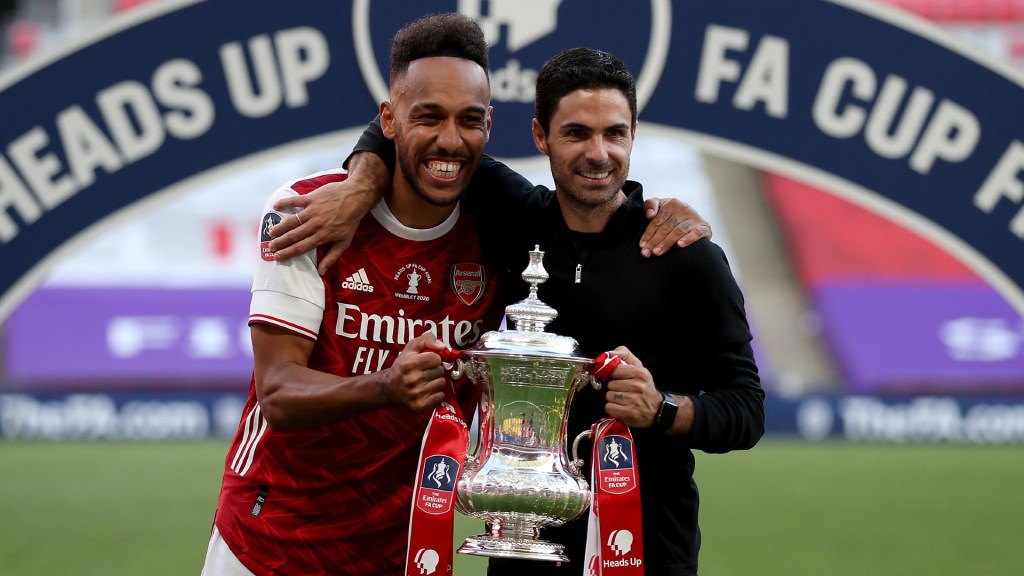
Better days for Aubameyang and Arteta: winning the FA Cup in 2020, when the forward’s match-winning performance earned him a new contract, which has subsequently proved hard for him to live up to.

However, there have to be questions about Barça’s decision to move for the 32-year-old at this time. Reports suggest that he has signed a contract until 2025, at which point he will be 36, but with a mutual break clause in summer 2023, which suggests that the Catalans may be spreading the cost of his contract over a longer period of time to essentially defer the impact on their budget – something that have also done with a new deal for French defender Samuel Umtiti.

Arriving as he did at the last minute of the window’s final day, Aubameyang’s move rounded off a busy month for Barça, who in addition to signing the former Arsenal man and Spanish international Torres, made moves for Wolves winger Adam Traore. This leaves the Blaugrana with something of a top-heavy squad – while Sergio Agüero’s enforced retirement has stripped them of his certain goals, this is a roster that already includes top class youngsters like Ansu Fati, recent recruits such as Memphis Depay and Luuk de Jong, plus the likes of Martin Braithwaite, who bailed Barça out of a hole when he joined a little under two years’ ago.

And then there’s Ousmane Dembélé – frequently injured, but mercurially talented and seemingly cast out for refusing to take a pay cut.

It’s hard to imagine how Barça can possibly accommodate all these forwards on a consistent basis, especially as they all seem to be suited to the styles of different coaches, having chopped and changed in the dugout in recent years – Xavi is the club’s fourth full-time coach since January 2020.

That instability is reflected in the club’s transfer strategy. This is a club that found itself like a kid in a sweetshop with a month’s pocket money when golden boy Neymar abdicated his status as heir to Messi’s throne and joined Paris St Germain, who met his €222m release clause in 2017 to make him the poster boy for the Qatar revolution.

That left Barça scrambling to replace the Brazilian, leading to a series of panic buys – Dembélé from Dortmund, Philippe Coutinho from Liverpool and Antoine Griezmann from Atlético Madrid all arriving for over €100m each. While all have shown flashes of the brilliance that dictated their transfer fees, none have been an unqualified success – Coutinho and Griezmann are both currently out on loan, while Dembélé looks to be running down his contract ahead of a lucrative ‘free’ transfer in the summer.

Those moves – and subsequent huge pay rises for established squad members – has left Barcelona spiralling financially; once a club that guaranteed success, in a certain style and based around promoting the very best academy prospects (they do have a very good crop coming through, it should be noted); they are currently a patchwork of players acquired under different coaches and regimes for what they can afford or account for creatively.

While Aubameyang’s form has taken a dip in recent seasons, finding the net on just 14 Premier League occasions in the last season-and-a-half, signing a player of his undoubted talent at a reduced salary and with no transfer fee is, on the surface, a smart move, but how exactly will Head Coach Xavi incorporate his particular role in the club’s system?

Barça is probably the most ideological football club there is, with the team’s possession-based style central to everything. For players to succeed at Camp Nou, the must be outstanding with the ball at their feet, operating in tight spaces and making perfect decisions.

Obviously Aubameyang is a smart, gifted footballer, but his game has always thrived with space in front of him to run into, darting onto angled balls between full back and centre half to spring a defence and finish regularly. Up against deep, packed defences who are happy to operate a low block, this kind of space is rare – will Xavi bend his style to suit Aubameyang or can the forward adapt to the Barça way?

Spurs Trio Send a Message to Conte in Impressive Liverpool Performance

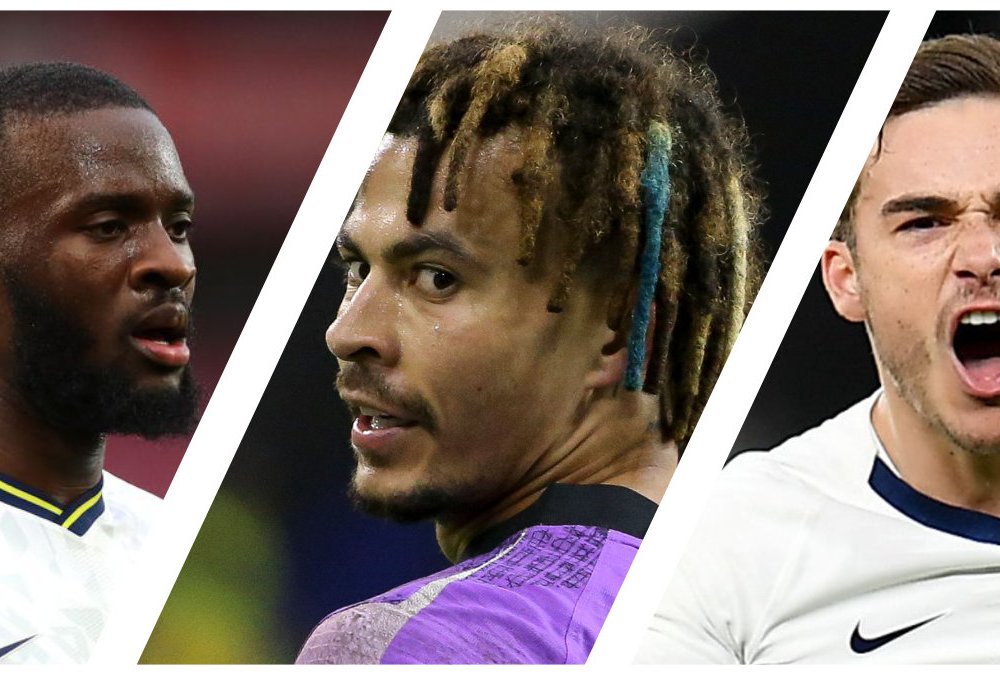
Whether it was by luck or design as a result of contending with a flurry of Covid cases in his squad, Tottenham manager Antonio Conte made a series of changes for the Premier League clash with Liverpool at the weekend, with Dele Alli, Tanguy Ndombele and Harry Winks returning to the side after respective spells on the sideline.

All three turned in strong performances and sent the Italian coach reminders that their futures might be in North London after all despite persistent rumours suggesting they might all be headed for the exit in the upcoming January transfer window. 

In a game that was played out with little in the way of a settled pattern or structure, ultimately resulting in an action-packed 2-2 draw, Spurs took the lead through another player looking to send a reminder of his talent, Harry Kane, after an excellent through ball from Ndombele.

The Frenchman is the definition of a mercurial talent; one who arrived at White Hart Lane in the summer of 2019 while Mauricio Pochettino was still in charge. Including the Argentinian, Spurs are now on their fourth full-time manager since Ndombele’s arrival and it is arguable that none of those bosses have been able to coax his best performances out on a regular basis.

A player who, when at his most confident and secure, can be a wizard on the ball, conjuring tricks and skills to occupy a dozen YouTube showreels, Ndombele may be stifled by the pace and physicality of the Premier League, although his successful time in France with Lyon and Amiens, where the game is hardly pedestrian, would suggest otherwise.

What seems more likely is that a player and character who thrives on freedom and being given space tactically to express himself is finding the transition to structure and discipline to be difficult, unsurprisingly. This is further exacerbated when you consider that his full-time bosses at the Lane include Jose Mourinho and Nuno Espirito Santo, two managers who prioritise the collective and solidity over individuality and expression.

Whether or not Conte can find a role that suits Ndomble will be pivotal to how his spell with the club plays out, as shoe-horning him into a hard-running, up-and-back midfield duty looks unlikely to get the best from him – especially when there are others in this squad capable of doing that particular job to a higher level.

Alli, meanwhile, has been the Premier League player most consistently linked with a move to Newcastle United, with the newly-rich Mapies rumoured to be keen on just about any player not holding down a regular place in their current side.

After exploding onto the League One scene in 2011 with his local side, MK Dons, including an eye-catching performance in a 4-0 win over Manchester United in the League Cup, Alli rapidly ascended to exulted levels, lighting up the Premier League and the Champions League at the heart of Pochettino’s energetic Spurs team.

He seemed to be a perfect, modern footballer – equal parts athletic, technical and creative with an eye for a goal and a keen sense for a late run into the box. His footballing relationships with Kane and Heung-Min Son were devastating for opponents and endearing for Spurs fans as he quickly became something of a darling for the White Hart Lane faithful.

Standout moments for Alli in his early Spurs days were a spectacular goal against Crystal Palace where he juggled the ball before turning and volleying home and a brace in a 3-1 win at Chelsea, the club’s first success at Stamford Bridge in 28 years. He collected the PFA Young Player of the Year Award in 15/16 and 16/17, becoming only the third player to claim the trophy twice in succession since its inception in 1974 and a strong showing in the 2018 World Cup sparked rumours of a possible move to Real Madrid.

However, after signing a six-year contract in 2018, Alli’s career has somewhat stalled – under Mourinho, he struggled to nail down a regular place in Spurs’ starting eleven, with the Portuguese manager feeling that he wasn’t a midfield player but seemingly not trusting him enough to find a place for him in attack.

Despite making 38 appearances in 18/19 and 19/20, Alli had drifted into something of a peripheral position at Spurs and only featured in 15 Premier League games in the whole of 20/21, a season which saw Mourinho’s side initially start well before fading badly after football’s restart following the suspension for Covid. If anything, Alli made more headlines that season for his on-screen dealings with Mourinho during the Amazon All Or Nothing documentary than for his on-field performances.

This campaign started promisingly for Alli, with Nuno finding a regular role for him in a deeper midfield position, but by the end of October there was frustration on both sides, with the former Wolves manager eventually omitting him from his matchday squads.

In the end, somewhat predictably, things didn’t work out for Nuno at Spurs and the former Porto goalkeeper was relieved of his duties after just four months in charge, making way for Conte’s arrival in November.

The Italian coach is known for playing a 3-5-2 or 3-4-3 formation where hard work and sacrifice are key, suggesting that it might be difficult for Alli to find a place – however, there were similar thoughts around another player with Spurs connections, Christian Eriksen, during the 20/21 season at Inter Milan. Conte was thought to not be a fan of the Danish playmaker, to the point of looking to offload him in the January transfer window. However, Inter’s owners insisted that the former Juventus boss should play with the toys he already had before any further additions, and after some tactical tinkering, Eriksen played a central role in the Nerazzuri claiming their first league title in a decade.

Against Liverpool, Alli showed the kind of verve and intelligence that makes him a dangerous player for Spurs, joining rapid breaks to either create opportunities for others or find himself in position to take chances himself – in fact, it was only an excellent save from the Reds’ ‘keeper Alisson that denied Alli from doubling his goal tally for the season.

If Alli could return to something like his form of 2016, 17 or 18, then Spurs would have an outstanding player on their hands, capable of match-winning moments on the biggest stages. Remarkably, he is still only 26 years old, so to write off a player of his undoubted talent would be a huge waste and one that could come back to haunt Spurs if he were to join a rival Premier League club.

Winks, meanwhile, is perhaps a player who has yet to find his place or to reach his peak. A busy midfielder who connects play and shuttles the ball to different areas rather than springing open defences with splitting passes, Pochettino described him as being in the mould of Barcelona icons Xavi and Andrés Iniesta, which might seem like lofty praise, but indicates his disposition as a contrast to more physical athletes in the squad at the time like Victor Wanyama or Moussa Sissoko.

Fast-forward to 2021 and Winks remains with Spurs while many others in midfield have moved on. At the same time, the club have shelled out on the likes of Giovani Lo Celso, who operates in similar spaces to Winks, reducing his opportunities to hold down a place in the side.

His role in a team is probably more along the lines of a deep-lying playmaker, attracting the ball from his team-mates in defence and then recycling possession before creating space for others to catch the eye further up the field.

Players like Winks have often struggled in the English game, where pace, power and getting stuck in will always be favourable characteristics. This is perhaps best characterised at Spurs by the arrival of Pierre-Emile Højbjerg, who has seemingly secured a regular place through a combative and industrious approach to the game.

The issue for Winks is that it is hard to imagine him being a regular starter for any of Spurs’ rivals; that said, against Liverpool he played an important role in Spurs’ midfield and demonstrated that he is more than capable of mixing it with the likes of Naby Keita in the Reds’ midfield.

This season he has only appeared in five Premier League fixtures, but if he can show more of the kind of performance he put in against one of the League’s best sides, there’s no reason to think he shouldn’t feature in Conte’s future plans. 

Ashley’s Era Finally Comes to an End for Newcastle’s Fatigued Fans

Newcastle takeover heralds bright future for club’s supporters, but what does it say for the game as a whole?

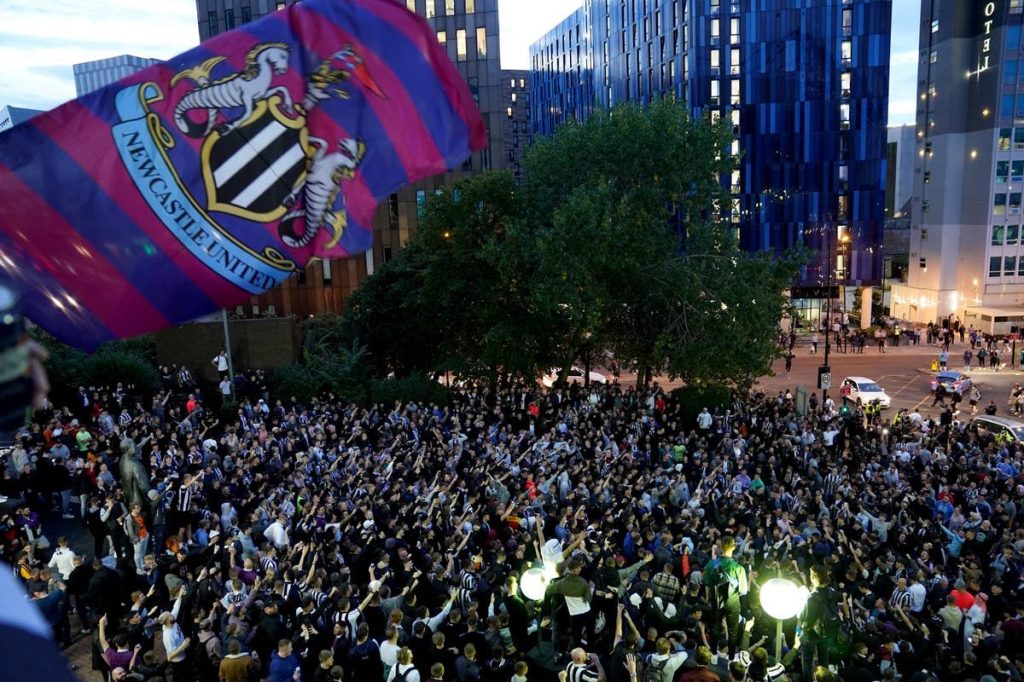
After 18 long months, finally, they can dare to dream. The deal to pass ownership of one of England’s most storied football clubs, Newcastle United, into the hands of an investment vehicle that is in no way connected to the ruling monarchy of Saudi Arabia (despite being chaired by the nation’s Crown Prince), is finally complete.

Since the club was purchased in 2007 by Mike Ashley, more Clown Prince than Crown, and his Sports Direct empire, the Magpies have unquestionably regressed. The team that were known in the mid-90s as football’s entertainers, attacking with cavalier style under Kevin Keegan and boasting stars such as David Ginola, Tino Aspilla and Alan Shearer, have become an average-at-best outfit with Premier League survival their only ambition every season.

It is no wonder that the supporters want – need – something to feel excited about.

As a city and wider region, Newcastle has suffered in a similar way to many other northern towns and cities under generations of British governments. The decline of traditional industries means that there are fewer and fewer things to unite ordinary, working class people like the mines once did, fuelling feelings of neglect and amplifying the importance of the long-standing community institutions which remain.

Clubs mean so much more to their fans and the residents of their locale than simply who wins a match each week. As a one-club city, this is even more the case for somewhere like Newcastle, where the football club goes a long way to putting the place and the people on the map.

While the club has essentially become the Premier League version of Slazenger or Lonsdale, it is not just the team which has suffered from financial malnutrition. Reports suggest that the club’s training ground, stadium and entire infrastructure are decaying at a visible rate, adding to the sense that Ashley and his Sport Direct goons couldn’t give a massive mug of tea for their footballing investment.

It is easy to see why Newcastle’s fans are excited about the takeover led by Saudi Arabia’s sovereign wealth fund, the Public Investment Fund (PIF). The promise of Manchester City-style investment, not just in eye-catching signings to lift the team up the league but also in the entire region, are hard to resist. Under the stewardship of Adu Dhabi’s own investment fund, Abu Dhabi United Group, City have developed an entire campus based around the Etihad Stadium which rivals the best facilities in the world, while the team has become one of the best in Europe, based on a similar model to Barcelona (no coincidence when the club’s Chief Executive and First Team Coach are former Barça employees).

Manchester City are lauded for creating a successful, stylish team while there is recognition for ADUG that it has all been done ‘the right way’, investing significant amounts of money not just in the playing staff but also the entire environment, regenerating the area and bringing hope to the region.

But that’s exactly how sportwashing works.

Much of the conversation around PIF’s takeover of Newcastle United has centred around the Saudi government’s approach to human rights, their enforcement of laws preventing homosexuality and the murder of critical journalist Jamal Khashoggi. Many of the same question marks around human rights and tolerance exist in relation to Abu Dhabi and also Qatar, the de facto owners of arch villains Paris St Germain and hosts of the 2022 World Cup.

So what makes this acquisition less palatable than those? Well, nothing actually – they are all clear and obvious attempts to brush over any negative views attached to those regimes and present their rulers and their nations in a more positive light.

A quick scroll through the social media cess pits shows that the general response to any negativity around PIF’s takeover of the Magpies is a universal demonstration of whataboutery; a sense that any questioning of the takeover is some kind of conspiracy against Newcastle as city by the metropolitan elite or an attempt to protect the footballing hegemony of the big six/four (delete as applicable).

While those big clubs would go to any length to protect their status – see ‘European Super League’ – the fact that it takes an investment from a questionable (at best) sovereign state to provide football fans with any hope for the future is a damning statement about the game itself.

It has always been true that money talks in football. The Premier League points tally at the end of the season nearly always matches the wage bill table, with the biggest spenders occupying the top places and the strugglers paying out the least.

But the gulf between the haves and the have nots continues to grow at an unsustainable pace in terms of maintaining viable competition. It is now impossible for fans outside the top six to conceive of breaching the upper echelons without the levels of investment being speculated upon for Newcastle. Despite the massive monies being poured into clubs from huge TV deals, the financial inertia around the biggest clubs means there is zero chance of anyone making it big.

Admittedly, Leicester City have bucked this trend in recent years, winning the FA Cup last season and the Premier League itself five years earlier – but their story is the exception rather than the rule (and their owner, Aiyawatt Srivaddhanaprabha, son of Vichai Srivaddhanaprabha and heir to the King Power estate, is hardly short of a few quid). Everton, meanwhile, since receiving investment in 2016 from Farhad Moshiri, whose estimated net worth is greater than Liverpool’s owner John W. Henry, have spent over £500million on transfers alone in that time but have yet to finish in the top six (they are currently fifth).

Football at the highest level no longer belongs to the fans or the people – it hasn’t done for years. It is now a profit and PR vehicle for wealthy owners, distant investors and giant corporations, which includes the bodies who supposedly run and police the sport.

Questioning Newcastle fans for being excited about their new owners is neither fair nor worthwhile and it misses the real point. it is not their fault that PIF’s connection to the Saudi state makes their club the latest sportswashing weapon and it is hard to begrudge them a moment of hope after years of neglect.

But that owning a club, a social institution and community pillar, like Newcastle United can only be achieved by such an organisation speaks volumes about the state of the game. After the European Super League fiasco earlier this year, football media was awash with positivity about fan ownership and the game returning the people; it is clear that this is as far away now as it has ever been at the highest level.

Asking whether Newcastle should be taken over essentially by the Saudi state or attempting to block the acquisition is essentially pointless and it would do nothing to address the real issues which the deal exposes.

The purchase of Newcastle United raises huge questions about ownership of clubs and the use of football for soft power sportswashing, many of which have already been asked of the game’s major stakeholders, investors and powerbrokers. At the same time, it does herald the end of a bleak period for the club, one that no fans would ever wish to endure – but it highlights the parlous state of the game’s governance when it requires turning a blind eye to all manner of actions and behaviours in order to gain hope from an acquisition effectively funded by a secretive petrostate with a painfully opaque agenda.

Crash! Bang! Wallop! Sport’s Fight for Market Supremacy

Wow! What an incredible spectacle: the world’s finest athletes going head-to-head in a winner-takes-all fight to the finish. Scenes everywhere.

It seems as though a growing number of sports are in their own deathmatch in a quest to claw their share of the television and therefore monetary pie, with triathlon’s SuperLeague being the example that immediately springs to mind.

Admittedly, triathlon is a difficult sport to televise and monetise: there’s three disciplines to cover, possibly closing down a city centre or out-of-town venue with races that range from just under two hours to almost eight hours depending on the format.

One of the perceived troubles with endurance sport is that there will always be long periods of non-action when looking on as a spectator – anyone who watched the entirety of last week’s Milan-San Remo bike race, all 300km of it, would testify to that, with the race only really coming to life in the final 30 minutes.

So why not just get rid of all the boring stuff and condense it down into a YouTube-friendly package? After all, we are constantly told that attention spans are dwindling, social media controls all and people get bored super easily – what fans want is all the action, constant dicing for position and sprinting for the line.

SuperLeague looks to deliver this by the bucket load. Admittedly, the SLT Arena Games, born in the midst of the pandemic with competitors swimming in an actual pool before riding and running in a virtual world, makes the best of a very difficult situation. Large-scale, mass participation events are difficult when trying to control a respiratory virus, so the more controlled the event can be, the better in this respect.

However, SuperLeague was already thrusted upon us before the Coronavirus was even a twinkle in a bat’s eye, with it’s self-appointed role of disrupting triathlon through innovative formats, which essentially translates into making the disciplines a lot shorter and changing their order.

Races are chaotic and closely contested – a natural result of not actually doing much racing and instead doing three times as many transitions. In the outdoor SuperLeague events, athletes are routinely awarded power-ups, such as ShortChutes (shortcuts) or alternatively hooked from the race if they fall too far behind. One wonders if they might occasionally be able to de-rail opponents with exploding tortoise shells.

Each event features multiple rounds, across different formats with points being awarded for positions and ultimately a winner crowned at the end of each race weekend and eventually the season. It’s utterly confusing and almost impossible to know who is actually winning from one event to the next, but put that minor detail aside and isn’t great to watch!

Well, no actually – it’s just a bit different. Not better, just different and well marketed. And considering that triathlon is one of the most inclusive and equal sports going, there’s a separate conversation needed about the different uniforms needed for men and women, with the latter seemingly required to wear eye-wateringly high-legged swimsuits, presumably because more flesh equals more viewers.

This feels like the latest in a line of attempts to reduce sports to just the highlights in a bid to catch the eye. Cricket was probably the first to do it right with the birth of Twenty20, reducing a five-day contest to a three-hour face-off, full of huge sixes and spectacular wickets – goodbye maiden overs! There are similar stories in snooker, pro cycling and athletics as more and more sports seek to squeeze their events further and further to produce an exciting, schedule-friendly product. Latest reports in football suggest that Champions League bigwigs are considering a TV subscription package where customers (fans?) pay sufficiently to only watch the final 15 minutes – who cares about the previous 75, after all?

Except the only thing that all these reductions seem to actually do is make the longer forms of competitions look long and boring. Why would you bother committing a full afternoon to watching something on telly when you could catch up with the best of the action on demand and then get back to some doomscrolling?

It begs the question of where this might end. Why bother with all that tedious football when you can cut straight to a penalty shoot out? Let’s just have a tie break in tennis and make Formula One a drag race.

There’s so much more to sport than the result; it’s the preparation, the discipline and the hours that going into making the start line. It’s the concentration, the camaraderie and the tactical nous on the day itself. Sporting competition is great because it ebbs and flows – you might be winning early, then on the back foot as your opponent regroups only to then find something special to claim victory.

Condensing the action down into a TV-friendly package feels akin to reducing a meal from a Michelin-starred chef into a convenient pill-form, because who has the time to waste it actually eating or socialising? Read a book you say? No thanks, I’ll just skim the Wikipedia page, that should tell me all I need to know and if it’s any good.

The issue stems essentially from the competition that exists for every eyeball and every pound in revenue. The roaring success of football’s Premier League in the last 30 years has forced every other sport, governing body and event organiser to consider their own ‘product’ and how best to ‘develop market share’.

Without meaning to sound like Old Man Abe Shouting at Clouds, what happened to sport for the sake of sport? Competitions and races whose main purpose was the challenge they provided for the competitors or the opportunity for the best to test themselves against their peers.

Perhaps if finances and airtime were shared slightly more evenly without the need to try and steal viewers from the all-conquering football behemoth, there would be more opportunity for sport to breath organically, rather than this stifling quest for self-suffocation.

But where’s the fun in that? Just show me the best bits and send me to the gift shop!

After All That, it’s As You Were for the Premier League.

It almost seems too great an understatement to describe the season just passed as being ‘strange’. It’s probably fair to say that not many pundits would have predicated a football campaign derailed for three months due to a global pandemic, so kudos for 2019/20 for claiming that particular slice of uniqueness.

Whether football’s return in July after the Covid-19 hiatus was due to financial or sporting reasons, it was probably only right for Liverpool to be crowned champions in as-near-as-possible the ‘normal’ way. Jurgen Klopp’s team has no obvious flaws, even accounting for the fact that their nominal number 9, Roberto Firmino, only found the net at Anfield for the first time in the final fixture.

Liverpool demonstrate modern football perfectly – pressing high and with immense tenacity, combined with rapid attacks on the break and flexible attacking options all over the pitch – the way they have reinvented the full-back role to being the instigation of most opportunities is perhaps most impressive.

Amidst the unprecedented this season, it was either re-assuring or depressing that the Premier League campaign ultimately finished with a top four comprised of Liverpool, Manchester City, Chelsea and Manchester United. That’s not to say that Frank Lampard and Ole Gunnar Solskjaer don’t deserve credit for the way their respective Chelsea and Manchester United sides ultimately secured their places in next season’s Champions League.

In particular, the signing of Portuguese midfielder Bruno Fernandes reinvigorated the previously directionless United, bringing even acceptable performances from Paul Pogba, proving that he can do it on a sunny Saturday afternoon in July after all.

As a result of finishing in the top four, both United and Chelsea have already started making moves on the transfer market. By adding Timo Werner and Hakim Ziyech to Lampard’s squad from RB Leipzig and Ajax respectively, Chelsea will be exciting to watch in 2020/21, as much for their thrust and flair in attack opposite the continued comedy that is their back four. While their next steps in the transfer market really should identify a commanding centre back to build their defence around – think Virgil van Dijk at Liverpool – they instead look set to sign another forward player in the Bundesliga starlet Kai Havertz. Here’s a hint for next season’s fantasy league: don’t buy Chelsea ‘keeper Kepa (but then you probably already knew that).

Elsewhere in the league, it was ultimately disappointing to see three pretenders to the Champions League places slip by the wayside after Project Restart. Going into the break, Leicester, Wolves and Sheffield United all looked primed to upset the traditional order. In particular, Wolves have been a breath of fresh air to the division, offering pace and power in attack (step forward Adama Traore), but also genuine class in Ruben Neves and Raul Jimenez. If they can add a couple more players in the same bracket and hold on to Nino Esposito Santo in the manager’s dugout, they could be a real force next season and maybe even finish sixth.

The fact that finishing in the top half-dozen is now effectively the promised land for many clubs is what makes this season’s completion somewhat disappointing. At different times throughout the campaign, Chelsea, Manchester United and Tottenham were all viewed through a prism of crisis, whether that be relying on the kids, harking back to the past or paying the price for a lack of investment. Yet they all still finished in the top six, begging the question – what does it take for the English Premier League to actually get shaken up?

Credit to Leicester, it was only the final day that they slipped from the top four to finish fifth, but that coveted Champions League berth was well within their grasp before the lockdown, so to see it pass through their fingers must have been heartbreaking for the team led by Brendon Rogers.

Away from the top table, it was hard not to feel sorry for Bournemouth, although they paid the price in their relegation for a series of transfers that failed to work out, leaving manager Eddie Howe relying on many of the same players who brought the south coast club up through the leagues. In their five years in the Premier League, they have been entertaining to watch, scoring many and conceding just slightly less – this year, that high-risk strategy proved to be their undoing as the goals dried up. After a couple of days of reflection it was hardly surprising to learn that Howe and Bournemouth have parted ways, and huge question marks now reside over whether or not the Cherries have the resources to compete in the Championship.

There must surely be less sympathy, however, for fellow trapdoor tumblers Watford, who started the season in the steady hands of Java Gracia, replaced him earlier than they could have with former boss Quique Sanchez Flores (who was decent first time around), then showed him the same door after just 12 games before eventually settling on the imposing, alleged wolf-wrestler Nigel Pearson. Admittedly the Hornets improved under Pearson and looked like they would actually beat the drop, only to shoot themselves in the foot by firing the former Leicester boss with just two games ago. Whether or not the rumours of a post-game bust up involving Pearson and his own players are true or not, this proved to be a spin too far for the Vicarage Road revolving door and relegation was no less than the club’s owners deserve.

While Watford and Bournemouth failed to beat the drop, seeing a clubs the size of Aston Villa secure a second season in the top flight is a definite positive. It’s hard to dislike talisman Jack Grealish, with his pristine hairstyle contrasting perfectly against his minimal, almost casual socks and therefore tiny shinpads. Grealish is something of a throwback footballer, willing to take risks in the final third – or the first third, for that matter – and play with his heart. While others would have long flown the nest of their boyhood club in search of a chunkier pay packet, Grealish remains, shining bright in a fairly unbalanced team – Tyrone Mings and John McGinn are both excellent, while many others at Villa Park are not – and ultimately playing a key role in keeping the Birmingham club up on the final day.

Grealish’s excellent strike in front of West Ham’s most lively crowd of the season (lol) confirmed his undoubted quality when it counts, even if his enthusiasm for doing his bit defensively might also have contributed to the Hammers’ equaliser moments later, deflecting the ball into the net beyond the hapless Pepe Reina.

Even allowing for his lockdown discrepancy and his previous penchant for nitrous oxide, the Premier League is far better for characters like Grealish, who we are often told do not exist in the modern game – mainly by the same agencies who love to question their commitment when seeing lads on their holidays in Ibiza. Drinking a beer. Whatever next.

Villa’s survival came down to goal difference on the final day thanks to the point secured at the London Stadium, not, entirely, as some have suggested, the draw claimed on the first day of Project Restart against Sheffield United. On that day at Villa Park, football’s goal-line decision system, Hawk-Eye, ended up looking more like dork eye, somehow failing to signal a clear goal for the Blades when the ball crossed the line in the arms of the Villains’ keeper Orjan Nyland. Yes, that proved to be a crucial point for Dean Smith’s Villa side, but it’s not the reason Bournemouth went down, so no legal proceedings please.

This is probably a good point to mention VAR and it’s arrival upon the Premier League this season. Scrap that – there’s never a good point to mention VAR.

So it was Villa up, Cherries and Hornets down and everyone else pretty much where you expected they would be, highlighting the predictability within the chaos and uncertainty created by months in lockdown at the hands of the coronavirus: Liverpool champions, City win one cup final and Arsenal the other.

As you were.

Ancelotti Appointment Likely to Raise Eyebrows

New Everton manager Carlo Ancelotti – is the former Chelsea boss the right man for the Toffees right now?

Former Chelsea manager takes the reigns at Goodison Park – but is this a marriage made in heaven?

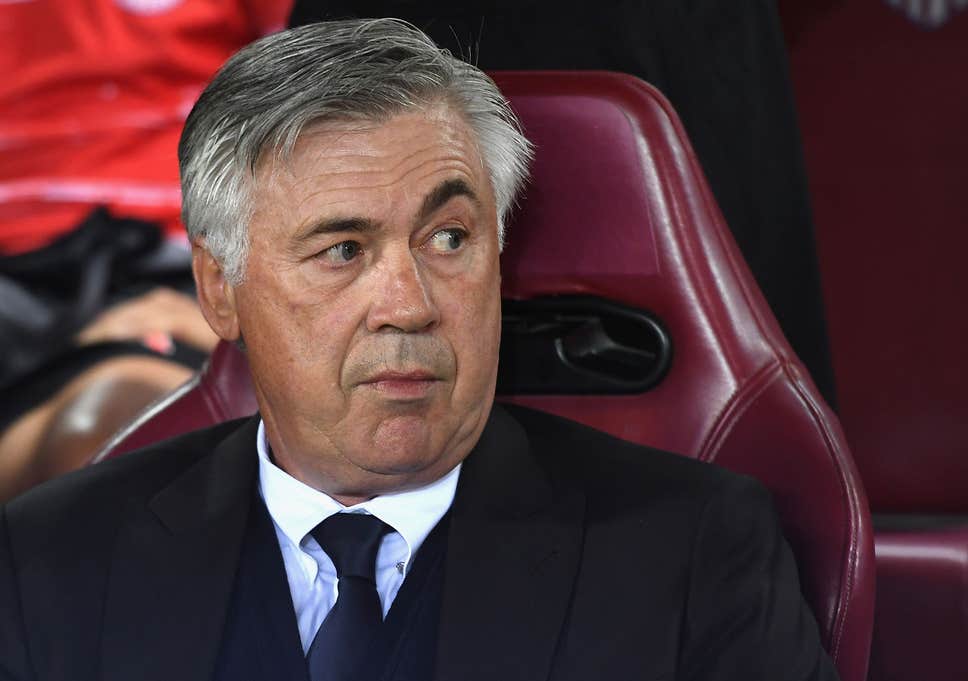
Saturday’s announcement that Everton had officially appointed Carlo Ancelotti as manager might not have come as a surprise after days of speculation, but it will certainly raise a few eyebrows – and not just that of the Italian coach himself.

Since sacking Marco Silva almost three weeks ago, the Merseyside club have been linked with a number of names to take over the hot seat, including the interim stewardship of the Toffees’ legendary centre forward and arch-bruiser, Duncan Ferguson.

In that time, the side may have seen an upturn in results but they are still 16th in the table and only three points from the relegation zone.

In fact, the Goodison Park outfit have endured such a poor start to the campaign – despite spending significant sums in the summer – that questions have to be asked about Silva’s next step, given that he has yet to really demonstrate the potential he showed in the early days of his managerial career.

Ancelotti: Made in Milan

Which brings us to Ancelotti, a coach of global repute with multiple domestic league titles and Champions League winners’ medals to his name, both as a player in Arrigo Sacchi’s all-conquering AC Milan side of the 80s and 90s, and subsequently in the dugout, leading, among others, the same Rossoneri side, Real Madrid and Bayern Munich.

The Italian’s travels have earned him something of a reputation for being a Galactico whisperer – coaxing performances from the highly-preened prima donnas of the modern football world (Neymar, Ronaldo, anyone?), and somehow piecing together sides despite them seeming to have zero potential for cohesion from the outside looking in.

However, he has also been through some tough times, including leading Petro-state funded Paris St Germain to second place in the league behind relative minnows Montpellier and, most recently, being at the helm as the Napoli built by Maurizio Sarri crumbled from being potential title challengers to lying miles behind the top teams – a position which ultimately led to his dismissal, despite positive results in Europe.

Stabilising Stamford Bridge

Much water has passed under the bridge since Ancelotti was last on these shores, leading Chelsea during an all-too-brief period between July 2009 and May 2011, where he stabilised the club in the wake of Jose Mourinho’s first tenure, picking up the pieces that Avram Grant and Luiz Felipe Scolari left behind. While at Stamford Bridge he earned a reputation as a dry and engaging speaker, and ultimately his departure was a disappointment, especially coming as it did less than 12 months after the club won the domestic double of league and cup for the first time in their history.

One thing that stands out from Ancelotti’s body of work is that, conversely, nothing stands out. He  doesn’t bring a definitive style or theory to his teams – there is no ‘Tiki-taka’, ‘Sarriball’ or ‘Gegenpress’. In this respect he is probably more akin to the likes of Mourinho or Max Allegri, in that he is pragmatic and adapts to the tools at his disposal, finding the best way to make the team function – although perhaps without the paranoia, histrionics and narcissism of Mourinho.

Quite what he will make of the squad he finds at Everton’s Finch Farm training ground remains to be seen. There are a number of highly talented players – Gylfi Sigurdsson, Richarlison and Yerry Mina, for example, would, on paper, be welcome additions to most sides – but there is also a fair degree of dross that remains from previous panic-stricken recruitment policies. There is also a reason why the side is languishing in the lower reaches of the table.

This is a coach who – almost exclusively – has dealt with the elite of the elite, spending short periods of time at the biggest clubs, working with the best players. It is hard to imagine how that experience will compare to his first days working with the squad at Goodison Park and it is unlikely that he will have significant resources to overhaul the squad in the upcoming January transfer window.

Is there a long term vision?

Looking further ahead, Everton are thought to be roughly two years away from moving to a new stadium, a process which always has a major impact on a club and can either be very West Ham or a bit more Spurs in its effect.

Given Ancelotti’s history of spending relatively short periods in post, a gambling man would steer clear of predicting that he would still be in charge when the ribbon is cut at the Toffees’ new home, meaning that there is an air of interim around his appointment.

Everton are a huge club with potential that should certainly be higher than their current position and the Italian is a popular figure as well as being a top coach. On paper, the appointment looks a positive one, but there’s just something about this union that suggests it might not be happily ever after.

Eriksen emphasises his importance to leave Spurs in a jam

Spurs' midfield playmaker Christian Eriksen: will he stay or will he go?

Hoorah! Football is back after what feels like a lifetime – or at least a couple of weeks – with the return of the Premier League. There were ominously large victories for Manchester City and Liverpool on the opening weekend, suggesting that we might, at best, be in for another two-horse title race, but we should probably expect another significant gap to the rest. 

Leading that chasing pack is likely again to be Tottenham, who belatedly sparked into life in their opening clash, eventually out-muscling newly promoted Aston Villa to claim a 3-1 win. The Villains, returning to the top flight after three seasons in the Championship, showed plenty of promise in their own performance, led by an outstanding display from central defender Tyrone Mings and an early smash-and-grab goal from John McGinn that threatened to claim all three points until deep into the second half. 

Until that point, Spurs had been, at best, blunt in attack, creating few chances despite dominating possession and territory – a situation that threatened to perpetuate the theory that star striker Harry Kane struggles to find the net in the month of August. 

With the England captain Kane being less supported, more swamped by the likes of Erik Lamela and Lucas Moura, Spurs looked bereft of ideas, struggling to create space and restricted to half-chances falling the way of Moussa Sissoko, whose finishing continues to display all the confidence of someone who scores roughly every two-and-bit years. 

However, that all changed with the introduction of Spurs’ Danish midfield schemer, Christian Eriksen, who has been the subject of a number of transfer rumours since making clear his desire to seek a new challenge away from North London, back in June. 

That declaration of intent was typical of Eriksen – understated, relatively classy but with clear intent that he was destined for more. This is a player that deserves to win titles, trophies and to be considered among the elite. 

That said, finding a landing spot for a player in this market is more complicated than it sounds; despite being in the final year of his contract, Eriksen is still viewed by Tottenham’s chairman, Daniel Levy, as being of great value, understandably, with a transfer fee in the region of £65m thought to be needed to capture his signature. 

Talk of a switch to Manchester United has never really taken off this summer and with the Premier League transfer window now closed, that route seems to be a dead end. In any case, Eriksen’s desired destination is thought to be Real Madrid, who have spent significantly this summer with returning coach Zinedine Zidane thought to be trying to show a lively dressing room – and boardroom – who’s boss. 

With the Madrid club in mind, continental clubs can play a waiting game with players heading towards the end of their contracts, choosing to eschew hefty transfer sums payable to the selling club and instead agree a pre-contract arrangement from 1st January, allowing them to siphon more cash into the star’s pocket as a result of the Bosman ruling. 

All of which leaves Spurs with a headache. On Saturday, they were stodgy, narrow and predictable until Eriksen’s arrival. After his return to the side they came to life, opening up the play and creating a number of clear-cut opportunities, leading to a debut goal for Tanguy Ndombele – who looks like he has the attributes to be a key player for Spurs – and two strikes for Kane, laying to rest the August curse nonsense. 

While Eriksen might not have been directly involved in all three goals, his influence was all over them, accepting the ball in tight areas, spotting passes that other players miss and moving the play rapidly from non-threatening positions into advanced parts of the pitch to stretch a well-organised defence to breaking point. 

It’s possible to suggest that, despite playing less than half of the game, this was a man-of-the-match performance from the Dane, unlocking the Villa defence and, ultimately, being central to Spurs claiming the win. 

Which only further underlines his value to the team – more effective than his midfield colleagues despite being given less than half the opportunity, Eriksen is the heartbeat of this side. If this game was, intentionally or otherwise, a chance for Spurs to test life after Christian, then it was not a pleasant experience. Admittedly, they do have a number of new and returning stars to bolster their attacking options – Heung-Min Son has one game left on his suspension while Dele Alli continues his comeback from injury and Giovani Lo Celso arrives from Betis with great promise – but it’s hard to imagine any of them having the same game-turning impact that Eriksen demonstrated here. 

Spurs are left with few potential outcomes: they either have to find a buyer for Eriksen before the transfer window closes on the continent at the end of August, which looks unlikely given that any potential move would have to work for all parties, or allow him to run down his current deal and potentially move for free. The third – and probably least likely solution – would be for Eriksen to backtrack and sign a new deal with the club. One possibility in this respect would be for Spurs to insert a release clause that would see Eriksen move if a certain fee was triggered, although finding the right level for all involved could be tricky. 

Levy has demonstrated in the past that he drives a hard bargain and generally sees the club come out on top – take the moves to Madrid of Luka Modric and Gareth Bale as examples. Conjuring up a solution that works for Spurs on this occasion would rank highly in Levy’s achievements to date, otherwise this could be the first in a number of costly departures that could see the likes of Toby Alderweireld, Jan Vertonghan and even manager Mauricio Pochettino following Eriksen out of the door.