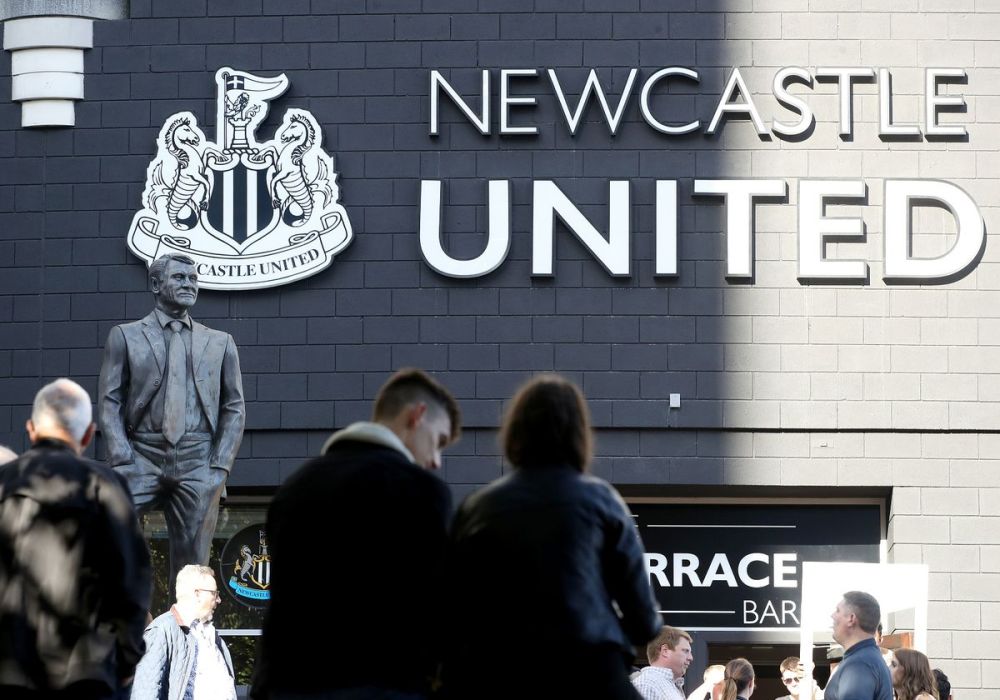
Ashley’s Era Finally Comes to an End for Newcastle’s Fatigued Fans
Newcastle takeover heralds bright future for club’s supporters, but what does it say for the game as a whole?
After 18 long months, finally, they can dare to dream. The deal to pass ownership of one of England’s most storied football clubs, Newcastle United, into the hands of an investment vehicle that is in no way connected to the ruling monarchy of Saudi Arabia (despite being chaired by the nation’s Crown Prince), is finally complete.
Since the club was purchased in 2007 by Mike Ashley, more Clown Prince than Crown, and his Sports Direct empire, the Magpies have unquestionably regressed. The team that were known in the mid-90s as football’s entertainers, attacking with cavalier style under Kevin Keegan and boasting stars such as David Ginola, Tino Aspilla and Alan Shearer, have become an average-at-best outfit with Premier League survival their only ambition every season.
It is no wonder that the supporters want – need – something to feel excited about.

The glory days, 1997, when Newcastle were the last team to beat Barcelona (speaking of clubs in decline) at the Nou Camp in the Champions League prior to this season
As a city and wider region, Newcastle has suffered in a similar way to many other northern towns and cities under generations of British governments. The decline of traditional industries means that there are fewer and fewer things to unite ordinary, working class people like the mines once did, fuelling feelings of neglect and amplifying the importance of the long-standing community institutions which remain.
Clubs mean so much more to their fans and the residents of their locale than simply who wins a match each week. As a one-club city, this is even more the case for somewhere like Newcastle, where the football club goes a long way to putting the place and the people on the map.
While the club has essentially become the Premier League version of Slazenger or Lonsdale, it is not just the team which has suffered from financial malnutrition. Reports suggest that the club’s training ground, stadium and entire infrastructure are decaying at a visible rate, adding to the sense that Ashley and his Sport Direct goons couldn’t give a massive mug of tea for their footballing investment.
It is easy to see why Newcastle’s fans are excited about the takeover led by Saudi Arabia’s sovereign wealth fund, the Public Investment Fund (PIF). The promise of Manchester City-style investment, not just in eye-catching signings to lift the team up the league but also in the entire region, are hard to resist. Under the stewardship of Adu Dhabi’s own investment fund, Abu Dhabi United Group, City have developed an entire campus based around the Etihad Stadium which rivals the best facilities in the world, while the team has become one of the best in Europe, based on a similar model to Barcelona (no coincidence when the club’s Chief Executive and First Team Coach are former Barça employees).
Manchester City are lauded for creating a successful, stylish team while there is recognition for ADUG that it has all been done ‘the right way’, investing significant amounts of money not just in the playing staff but also the entire environment, regenerating the area and bringing hope to the region.
But that’s exactly how sportwashing works.
Much of the conversation around PIF’s takeover of Newcastle United has centred around the Saudi government’s approach to human rights, their enforcement of laws preventing homosexuality and the murder of critical journalist Jamal Khashoggi. Many of the same question marks around human rights and tolerance exist in relation to Abu Dhabi and also Qatar, the de facto owners of arch villains Paris St Germain and hosts of the 2022 World Cup.
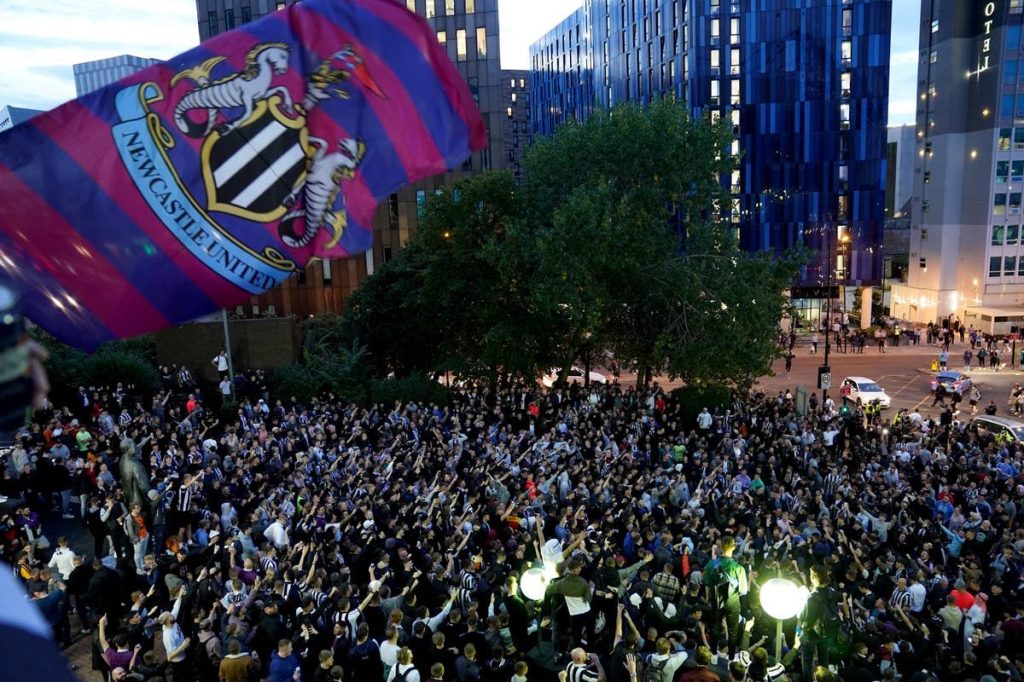
Newcastle fans celebrate the news of their club’s takeover by the Saudi-backed Public Investment Fund
So what makes this acquisition less palatable than those? Well, nothing actually – they are all clear and obvious attempts to brush over any negative views attached to those regimes and present their rulers and their nations in a more positive light.
A quick scroll through the social media cess pits shows that the general response to any negativity around PIF’s takeover of the Magpies is a universal demonstration of whataboutery; a sense that any questioning of the takeover is some kind of conspiracy against Newcastle as city by the metropolitan elite or an attempt to protect the footballing hegemony of the big six/four (delete as applicable).
While those big clubs would go to any length to protect their status – see ‘European Super League’ – the fact that it takes an investment from a questionable (at best) sovereign state to provide football fans with any hope for the future is a damning statement about the game itself.
It has always been true that money talks in football. The Premier League points tally at the end of the season nearly always matches the wage bill table, with the biggest spenders occupying the top places and the strugglers paying out the least.
But the gulf between the haves and the have nots continues to grow at an unsustainable pace in terms of maintaining viable competition. It is now impossible for fans outside the top six to conceive of breaching the upper echelons without the levels of investment being speculated upon for Newcastle. Despite the massive monies being poured into clubs from huge TV deals, the financial inertia around the biggest clubs means there is zero chance of anyone making it big.
Admittedly, Leicester City have bucked this trend in recent years, winning the FA Cup last season and the Premier League itself five years earlier – but their story is the exception rather than the rule (and their owner, Aiyawatt Srivaddhanaprabha, son of Vichai Srivaddhanaprabha and heir to the King Power estate, is hardly short of a few quid). Everton, meanwhile, since receiving investment in 2016 from Farhad Moshiri, whose estimated net worth is greater than Liverpool’s owner John W. Henry, have spent over £500million on transfers alone in that time but have yet to finish in the top six (they are currently fifth).
Football at the highest level no longer belongs to the fans or the people – it hasn’t done for years. It is now a profit and PR vehicle for wealthy owners, distant investors and giant corporations, which includes the bodies who supposedly run and police the sport.
Questioning Newcastle fans for being excited about their new owners is neither fair nor worthwhile and it misses the real point. it is not their fault that PIF’s connection to the Saudi state makes their club the latest sportswashing weapon and it is hard to begrudge them a moment of hope after years of neglect.
But that owning a club, a social institution and community pillar, like Newcastle United can only be achieved by such an organisation speaks volumes about the state of the game. After the European Super League fiasco earlier this year, football media was awash with positivity about fan ownership and the game returning the people; it is clear that this is as far away now as it has ever been at the highest level.
Asking whether Newcastle should be taken over essentially by the Saudi state or attempting to block the acquisition is essentially pointless and it would do nothing to address the real issues which the deal exposes.
The purchase of Newcastle United raises huge questions about ownership of clubs and the use of football for soft power sportswashing, many of which have already been asked of the game’s major stakeholders, investors and powerbrokers. At the same time, it does herald the end of a bleak period for the club, one that no fans would ever wish to endure – but it highlights the parlous state of the game’s governance when it requires turning a blind eye to all manner of actions and behaviours in order to gain hope from an acquisition effectively funded by a secretive petrostate with a painfully opaque agenda.
 sixteeneightyone