Sweet like chocolate: Swiss-style Champions League league phase nears conclusion but what have we learned?
Ahead of next week’s fixtures in the catchily-titled Champions League League Phase, we find ourselves five-eighths of the way through the new “Swiss-style” model, making now as good a time as any to review its impact so far.
Prior to the new format being rolled out this season, there was much consternation and gnashing of teeth about what it might bring: the huge new table, more fixtures and almost certainly heavier defeats for the European game’s “lesser” lights.
As it turns out, that hasn’t really been the case. There have been some hefty drubbings dished out, such as Bayern Munich’s 9-2 win over Dinamo Zagreb on matchday one or Borussia Dortmund crushing Celtic 7-1 on matchday two, but on the whole, there have actually been more surprise scorelines than might have been expected.
Results such as Monaco beating Barcelona 2-1 (although Barça’s recent travails made that one not a huge shock), Lille claiming the scalps of both Madrid sides on consecutive matchdays or Sporting overcoming the loss of head coach Ruben Amorim to beat Manchester City 4-1 on matchday four.
It is still hard to predict the final outcomes of the 36-team super-table, but it is clear that some clubs have struggled to meet their historical best – specifically Manchester City, Real Madrid and PSG, with the Parisians looking to be in the most peril.
However, with three games still to play, it is still hard to see all three clubs not making their way through to the knockout stage, even if they find themselves in the play-off stage rather than leapfrogging straight to the final 16.
PSG look at most risk, but with games to come against RB Leipzig, who are set to be the League Phase’s biggest casualties, Manchester City and Stuttgart, who have also underperformed, seven more points looks plausible, which would mean 11 for the final standings and probably a play off spot.
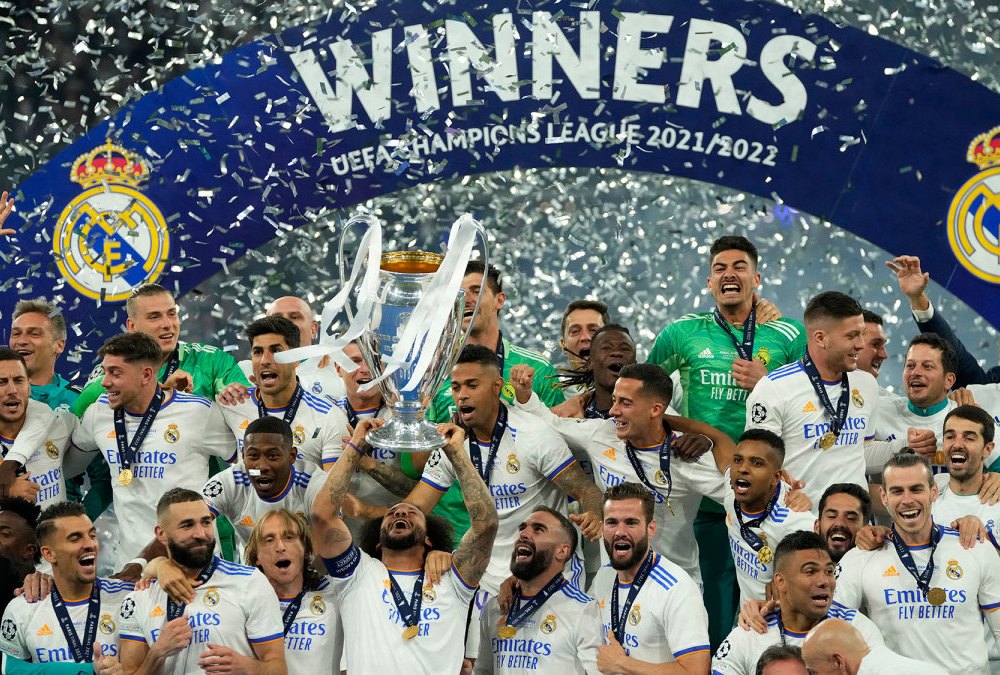
Meanwhile, for Madrid and Manchester City, the competition’s last two winners, of course, a further five points should do the job. Madrid do have to face Italian league leaders Atalanta in their next fixture, but with points already in the bag and games against RB Salzburg and Brest, currently defying expectations in 11th spot, they should be ok. Same goes for City, who despite a terrible run of form domestically should still progress comfortably – they have 8 points to their name and games coming up against Juventus, PSG and Club Brugge.
So while Liverpool, with five wins from five, peer down from the top of Mount League Phase, what does this all tell us? Well, not much more than the previous format, in all honesty.
We’re still most likely to see the “biggest” clubs in the knockout phase, despite the odd travail and blooded nose along the way. Even if there is a surprise elimination at this stage, that happened in the past too – just last year, we all chuckled heartily at the ongoing malaise at Old Trafford as Manchester United came last in their group. Milan, Newcastle and Sevilla were also among the list of clubs from the big five leagues that failed to make the knockout stages.
If anything, the new format has killed off the previous format’s most egregious failing – that which saw group stage failures rewarded with a parachute into the knockout stages of the Europa League. This at least makes the second and third tier competitions ‘cleaner’ – no last-minute super club additions to swoop in and steal the silverware. Or Sevilla, just for a change.
There is also the argument that more teams in this pre-knockout phase has meant more opportunities for “smaller clubs”, with teams such as Dinamo Zagreb, Club Brugge and – with apologies for highlighting Scottish football’s place in the world – Celtic in with a chance of making it through. However, getting to the play-off round is in effect the same as making the final 32 (ie, a play-off to reach the round of 16), so all the new format is doing is eliminating an extra four teams, which at the moment are likely to be Young Boys, Slovan Bratislava, RB Leipzig (all on zero points) and Bologna (one point).
Should those faltering big clubs make the play-off round, they will then face a two-legged tie against one of the other teams outside the top eight. This play-off is seeded, with the teams from 9-16 drawn against opponents from 17-24, so based on current standings Madrid could face Milan, Benfica or Bayern – or they could be paired with Lille or Brest, who have already sprung surprises in this competition.
This kind of proves the point that this complicated league phase has changed nothing – the competition only really gets going when it reaches the knockout phase, bringing with it the element of unexpected clashes that really matter, with no safety net for underperforming losers.
Instead, all we have really seen from the bloated group stage is more ultimately meaningless encounters between the biggest and richest. So far we have seen Inter beat Arsenal, Barcelona beat Bayern heavily and Liverpool win at Milan, but so what? None if it matters at this stage.
It’s all just the biggest clubs swelling their already stuffed coffers with more cash. More matches as content and more eyeballs and flashy social media highlight reels.
Any stories that have been created so far have centred around negative narratives associated with the names we already know – Mpabbé’s struggles in Madrid, Guardiola’s head-scratching at underperforming City or Slot’s machines taking the table by strorm. There has been practically zero spotlight for Monaco, riding high in 8th, or Brest punching well above their weight. It would have been fantastic to learn more about clubs making headlines like this, but there’s no oxygen for them among all the noise of the big boys chasing clicks.
No one is suggesting that the previous format was loved and created endless classic clashes – the truth instead was a bundle of dead rubbers towards the end of the group stage and maybe one or two games that really mattered. But at least it was over sooner – this seemingly endless League Phase will still be live in the last week of January, meaning extra complication as the transfer window creeps towards slamming shut.
The previous format felt like what it was: a preliminary series of fixtures that ultimately weeded out the sides expected to be eliminated while also creating revenue and security for the biggest clubs. By contrast, the new format does this too, but with less clarity, more meaningless games and with greater threat to the rest of football, portending towards the inevitable European Super League, where inconsequential mid-table clashes between Atleti and Juventus will be the norm while also further distorting domestic leagues by channeling funds to only one club from countries like Denmark, Belgium or Slovakia.
Knockout football always was and always will be the great leveller in football; any team can beat any other on the right day and in the right circumstances, even over two legs. Minimising that format in favour of an expanded league system reduces the risk, creating more opportunities for recovery. And the bigger the league, the more fixtures it creates, the greater the safety net. It only serves to close the shop further, reinforce the exterior window and stretch the arm at which the rest of football is held at bay.
The biggest clashes on famous nights in European competitions always felt so important because they happened so rarely – supply and demand exists in football as in economics, so scarcity increases value. Just spamming the fixture list with more games between the biggest names only makes those encounters less significant in the long run.
No doubt this format will appeal to many fans by creating more fixtures between the biggest clubs, but you really can have too much of a good thing. A dash of syrup in your coffee can add an extra sweet hit, but if you’re already serving yours with multiple spoons of sugar, swirly cream and and a chocolate flake, then you’re probably only heading towards diabetes.













 sixteeneightyone