PSG Eventually Overcome Atalanta Despite the Heavy Weight of History

On what was essentially opening night for the compacted Champions League, which sees this year’s edition minimised into a tiny tournament in Portugal, there was no lack of drama and excitement in the first quarter final, between minnows Atalanta and money bags Paris Saint-Germain.

Much had been written in the build-up to the game about the gaping difference between the two sides’ playing budgets and the fairytale that has seen the side from Bergamo in Northern Italy, where the Coronavirus crisis really kicked off on March, scrap and battle their way to the quarter-finals. In particular, this is a team making its debut in Europe’s elite competition and which began that campaign by losing their first three fixtures in the group stage. For them to even reach the final eight is a fantastic story and a testament to a team that embodies the concept of ‘more than the sum of their parts’.

And yet, when it came to the crunch, there was something achingly inevitable about the outcome of this fixture – a 2-1 win for the Parisians – despite ultimately needing to make use of every available minute beyond the scheduled ninety.

That the eventual heroes for PSG were not the hugely price-tagged Neymar or Kylian Mbappe but defensive midfield lump Marquinhos and former Stoke City plodder Eric Maxim Choupo-Moting demonstrates perhaps the desperation that had set in among the Paris side, throwing everything at Atalanta in search of a late reprise.

When Mario Pasilic opened the scoring for the underdogs midway through the first half, it was no less than their play to that point deserved. All eleven players appear committed to the high-pressure, high-intensity approach deployed by head coach Gian Piero Gasperini and it is easy to see why they have attracted so many admirers along the way so far. Playing with ambition and imagination in the final third, they created a number of good chances before eventually taking the lead, despite the best opportunity falling to PSG’s Neymar, who completely fluffed his own lines, scuffing wide in a one-on-one situation with Atalanta’s stand-in ‘keeper, Marco Sportiello.

With 2018 World Cup star Mbappe rated as only 80% match fit and therefore starting on the bench, PSG relied heavily on the Brazilian Neymar from the outset. That reliance is almost certainly their Achilles heal, placing what must be a mass of pressure on the shoulders of one player. It was almost like watching the Brazil side that Neymar nearly carried to World Cup glory in 2014, when the South American nation hosted the tournament and ultimately crumbled in the semi-final against Germany, having lost their talisman to injury in the quarters.

Throughout that competition, Neymar was the standout star in a fairly average team that was nowhere near the level of quality demanded by fervent home support. It must be incredibly tough to carry that kind of expectation and deliver consistently, regardless of how many zeroes appear on your payslip.

Throughout this game, Neymar appeared to be living his own personal nightmare – he was regularly appearing in the right places, creating opportunities for himself and others, yet nothing clicked, everything seemed forced and unnatural.

It is easy to dislike this PSG side, for their petro-funded assembly of global talent, their classless baiting of Borussia Dortmund earlier in the competition and for their boringly relentless success in their domestic league.

However, much as we all chuckle when this year’s edition of the PSG Champions League catastrophe plays out in front of us, it’s easy to forget, that these are humans, young men too. After their 6-1 collapse to Barcelona and last year’s humbling at home against a supposedly crisis-ridden Manchester United, there must always be a nagging element of doubt in the minds of these players as to whether things will actually ever go their way.

In the build up to what seems like every PSG tie, there grows an air of ‘Good versus Evil’ about proceedings, with the Paris side being pitched as the bad guys because of their Qatari owners and the funds sloshing around in their budgets. But maybe it’s worth remembering that these are essentially just men, footballers, lads too – when they grew up kicking a ball around on an estate or a beach somewhere, it’s almost certain that they dreamt of scoring goals, winning medals and celebrating with fans, not becoming a collection of Bond-style footballing henchmen, taking up arms against the next plucky underdog story to come their way.

While it would certainly have been an incredible story for Atalanta to become the first Champions League debutants to reach the semi-finals in 14 years, as with almost every football narrative, there are two sides to every story. When Neymar sliced that incredible pass through the tiring Atalanta defence last night to find Mbappe and provide him with the space to lay the winning goal on a plate for Choupo-Moting, there must have been a huge sense of relief for all involved.

Ever since he first appeared as an angular teenager with incredible skills, Neymar has been burdened by the lineage that he represents in Brazilian football – Pele, Romario, Ronaldo et al. The weight of that history alone would be huge to contend and perform with, but this is a player who has also traversed the demands of a spell at Barcelona in the shadow of Leo Messi and then onto his own stage in Paris, where every performance comes with a golden asterisk.

When Neymar and PSG falter, the footballing world smiles, points and laughs. When they succeed, it is shrugged off as only being an inevitable result of the expenditure.

Love or hate Neymar and his band of well-paid men, maybe sometimes it’s ok for them to have their own moment of celebration, overcoming the frustration of a night where it seemed like they might play forever and never score.

After all, if the bad guys always lost, we’d eventually get tired of the good sides winning and would crave the rise of the character villain, the spirited anti-football or the guy who pokes authority in the eye. And we don’t need another Mourinho.
After All That, it’s As You Were for the Premier League.

It almost seems too great an understatement to describe the season just passed as being ‘strange’. It’s probably fair to say that not many pundits would have predicated a football campaign derailed for three months due to a global pandemic, so kudos for 2019/20 for claiming that particular slice of uniqueness.

Whether football’s return in July after the Covid-19 hiatus was due to financial or sporting reasons, it was probably only right for Liverpool to be crowned champions in as-near-as-possible the ‘normal’ way. Jurgen Klopp’s team has no obvious flaws, even accounting for the fact that their nominal number 9, Roberto Firmino, only found the net at Anfield for the first time in the final fixture.

Liverpool demonstrate modern football perfectly – pressing high and with immense tenacity, combined with rapid attacks on the break and flexible attacking options all over the pitch – the way they have reinvented the full-back role to being the instigation of most opportunities is perhaps most impressive.

Amidst the unprecedented this season, it was either re-assuring or depressing that the Premier League campaign ultimately finished with a top four comprised of Liverpool, Manchester City, Chelsea and Manchester United. That’s not to say that Frank Lampard and Ole Gunnar Solskjaer don’t deserve credit for the way their respective Chelsea and Manchester United sides ultimately secured their places in next season’s Champions League.

In particular, the signing of Portuguese midfielder Bruno Fernandes reinvigorated the previously directionless United, bringing even acceptable performances from Paul Pogba, proving that he can do it on a sunny Saturday afternoon in July after all.

As a result of finishing in the top four, both United and Chelsea have already started making moves on the transfer market. By adding Timo Werner and Hakim Ziyech to Lampard’s squad from RB Leipzig and Ajax respectively, Chelsea will be exciting to watch in 2020/21, as much for their thrust and flair in attack opposite the continued comedy that is their back four. While their next steps in the transfer market really should identify a commanding centre back to build their defence around – think Virgil van Dijk at Liverpool – they instead look set to sign another forward player in the Bundesliga starlet Kai Havertz. Here’s a hint for next season’s fantasy league: don’t buy Chelsea ‘keeper Kepa (but then you probably already knew that).

Elsewhere in the league, it was ultimately disappointing to see three pretenders to the Champions League places slip by the wayside after Project Restart. Going into the break, Leicester, Wolves and Sheffield United all looked primed to upset the traditional order. In particular, Wolves have been a breath of fresh air to the division, offering pace and power in attack (step forward Adama Traore), but also genuine class in Ruben Neves and Raul Jimenez. If they can add a couple more players in the same bracket and hold on to Nino Esposito Santo in the manager’s dugout, they could be a real force next season and maybe even finish sixth.

The fact that finishing in the top half-dozen is now effectively the promised land for many clubs is what makes this season’s completion somewhat disappointing. At different times throughout the campaign, Chelsea, Manchester United and Tottenham were all viewed through a prism of crisis, whether that be relying on the kids, harking back to the past or paying the price for a lack of investment. Yet they all still finished in the top six, begging the question – what does it take for the English Premier League to actually get shaken up?

Credit to Leicester, it was only the final day that they slipped from the top four to finish fifth, but that coveted Champions League berth was well within their grasp before the lockdown, so to see it pass through their fingers must have been heartbreaking for the team led by Brendon Rogers.

Away from the top table, it was hard not to feel sorry for Bournemouth, although they paid the price in their relegation for a series of transfers that failed to work out, leaving manager Eddie Howe relying on many of the same players who brought the south coast club up through the leagues. In their five years in the Premier League, they have been entertaining to watch, scoring many and conceding just slightly less – this year, that high-risk strategy proved to be their undoing as the goals dried up. After a couple of days of reflection it was hardly surprising to learn that Howe and Bournemouth have parted ways, and huge question marks now reside over whether or not the Cherries have the resources to compete in the Championship.

There must surely be less sympathy, however, for fellow trapdoor tumblers Watford, who started the season in the steady hands of Java Gracia, replaced him earlier than they could have with former boss Quique Sanchez Flores (who was decent first time around), then showed him the same door after just 12 games before eventually settling on the imposing, alleged wolf-wrestler Nigel Pearson. Admittedly the Hornets improved under Pearson and looked like they would actually beat the drop, only to shoot themselves in the foot by firing the former Leicester boss with just two games ago. Whether or not the rumours of a post-game bust up involving Pearson and his own players are true or not, this proved to be a spin too far for the Vicarage Road revolving door and relegation was no less than the club’s owners deserve.

While Watford and Bournemouth failed to beat the drop, seeing a clubs the size of Aston Villa secure a second season in the top flight is a definite positive. It’s hard to dislike talisman Jack Grealish, with his pristine hairstyle contrasting perfectly against his minimal, almost casual socks and therefore tiny shinpads. Grealish is something of a throwback footballer, willing to take risks in the final third – or the first third, for that matter – and play with his heart. While others would have long flown the nest of their boyhood club in search of a chunkier pay packet, Grealish remains, shining bright in a fairly unbalanced team – Tyrone Mings and John McGinn are both excellent, while many others at Villa Park are not – and ultimately playing a key role in keeping the Birmingham club up on the final day.

Grealish’s excellent strike in front of West Ham’s most lively crowd of the season (lol) confirmed his undoubted quality when it counts, even if his enthusiasm for doing his bit defensively might also have contributed to the Hammers’ equaliser moments later, deflecting the ball into the net beyond the hapless Pepe Reina.

Even allowing for his lockdown discrepancy and his previous penchant for nitrous oxide, the Premier League is far better for characters like Grealish, who we are often told do not exist in the modern game – mainly by the same agencies who love to question their commitment when seeing lads on their holidays in Ibiza. Drinking a beer. Whatever next.

Villa’s survival came down to goal difference on the final day thanks to the point secured at the London Stadium, not, entirely, as some have suggested, the draw claimed on the first day of Project Restart against Sheffield United. On that day at Villa Park, football’s goal-line decision system, Hawk-Eye, ended up looking more like dork eye, somehow failing to signal a clear goal for the Blades when the ball crossed the line in the arms of the Villains’ keeper Orjan Nyland. Yes, that proved to be a crucial point for Dean Smith’s Villa side, but it’s not the reason Bournemouth went down, so no legal proceedings please.

This is probably a good point to mention VAR and it’s arrival upon the Premier League this season. Scrap that – there’s never a good point to mention VAR.

So it was Villa up, Cherries and Hornets down and everyone else pretty much where you expected they would be, highlighting the predictability within the chaos and uncertainty created by months in lockdown at the hands of the coronavirus: Liverpool champions, City win one cup final and Arsenal the other.

As you were.

Ancelotti Appointment Likely to Raise Eyebrows

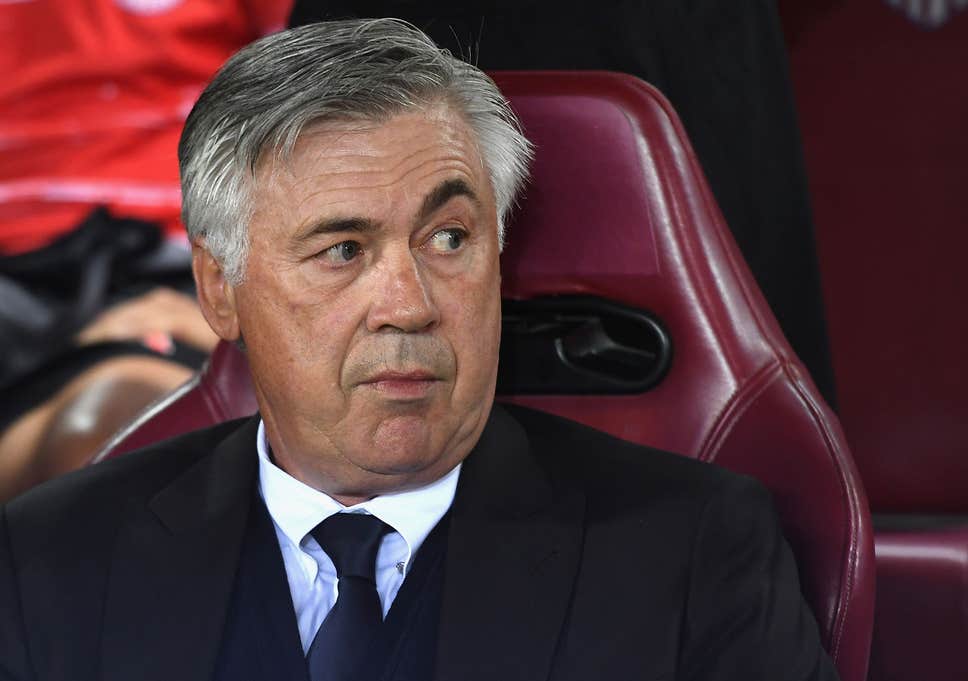
New Everton manager Carlo Ancelotti – is the former Chelsea boss the right man for the Toffees right now?

Former Chelsea manager takes the reigns at Goodison Park – but is this a marriage made in heaven?

Saturday’s announcement that Everton had officially appointed Carlo Ancelotti as manager might not have come as a surprise after days of speculation, but it will certainly raise a few eyebrows – and not just that of the Italian coach himself.

Since sacking Marco Silva almost three weeks ago, the Merseyside club have been linked with a number of names to take over the hot seat, including the interim stewardship of the Toffees’ legendary centre forward and arch-bruiser, Duncan Ferguson.

In that time, the side may have seen an upturn in results but they are still 16th in the table and only three points from the relegation zone.

In fact, the Goodison Park outfit have endured such a poor start to the campaign – despite spending significant sums in the summer – that questions have to be asked about Silva’s next step, given that he has yet to really demonstrate the potential he showed in the early days of his managerial career.

Ancelotti: Made in Milan

Which brings us to Ancelotti, a coach of global repute with multiple domestic league titles and Champions League winners’ medals to his name, both as a player in Arrigo Sacchi’s all-conquering AC Milan side of the 80s and 90s, and subsequently in the dugout, leading, among others, the same Rossoneri side, Real Madrid and Bayern Munich.

The Italian’s travels have earned him something of a reputation for being a Galactico whisperer – coaxing performances from the highly-preened prima donnas of the modern football world (Neymar, Ronaldo, anyone?), and somehow piecing together sides despite them seeming to have zero potential for cohesion from the outside looking in.

However, he has also been through some tough times, including leading Petro-state funded Paris St Germain to second place in the league behind relative minnows Montpellier and, most recently, being at the helm as the Napoli built by Maurizio Sarri crumbled from being potential title challengers to lying miles behind the top teams – a position which ultimately led to his dismissal, despite positive results in Europe.

Stabilising Stamford Bridge

Much water has passed under the bridge since Ancelotti was last on these shores, leading Chelsea during an all-too-brief period between July 2009 and May 2011, where he stabilised the club in the wake of Jose Mourinho’s first tenure, picking up the pieces that Avram Grant and Luiz Felipe Scolari left behind. While at Stamford Bridge he earned a reputation as a dry and engaging speaker, and ultimately his departure was a disappointment, especially coming as it did less than 12 months after the club won the domestic double of league and cup for the first time in their history.

One thing that stands out from Ancelotti’s body of work is that, conversely, nothing stands out. He  doesn’t bring a definitive style or theory to his teams – there is no ‘Tiki-taka’, ‘Sarriball’ or ‘Gegenpress’. In this respect he is probably more akin to the likes of Mourinho or Max Allegri, in that he is pragmatic and adapts to the tools at his disposal, finding the best way to make the team function – although perhaps without the paranoia, histrionics and narcissism of Mourinho.

Quite what he will make of the squad he finds at Everton’s Finch Farm training ground remains to be seen. There are a number of highly talented players – Gylfi Sigurdsson, Richarlison and Yerry Mina, for example, would, on paper, be welcome additions to most sides – but there is also a fair degree of dross that remains from previous panic-stricken recruitment policies. There is also a reason why the side is languishing in the lower reaches of the table.

This is a coach who – almost exclusively – has dealt with the elite of the elite, spending short periods of time at the biggest clubs, working with the best players. It is hard to imagine how that experience will compare to his first days working with the squad at Goodison Park and it is unlikely that he will have significant resources to overhaul the squad in the upcoming January transfer window.

Is there a long term vision?

Looking further ahead, Everton are thought to be roughly two years away from moving to a new stadium, a process which always has a major impact on a club and can either be very West Ham or a bit more Spurs in its effect.

Given Ancelotti’s history of spending relatively short periods in post, a gambling man would steer clear of predicting that he would still be in charge when the ribbon is cut at the Toffees’ new home, meaning that there is an air of interim around his appointment.

Everton are a huge club with potential that should certainly be higher than their current position and the Italian is a popular figure as well as being a top coach. On paper, the appointment looks a positive one, but there’s just something about this union that suggests it might not be happily ever after.

RIP Bury FC: a sad tale with lessons to learn?

Late in the evening on Tuesday 27th August, it finally happened: after months of threats, possible breakthroughs and false dawns, the English Football League (EFL) were finally forced to expel one of its member clubs, Bury FC.

This was a truly sad end to a long and drawn out saga, the culmination of a series of events that has seen this historic club, founded in 1885, cast from the league setup after 125 years of membership and into almost-certain liquidation. Just a few months ago, in April, the club’s fans, players and staff were celebrating the momentous achievement of promotion from the league’s lowest tier, League 2, to the third rung of the English football ladder, League 1.

However, that promotion itself came in the face of a growing crisis at the club with players and staff reporting unpaid wages dating back to February and the club’s owner buckling under the weight of mounting debts, many of which were leveraged against the club and its assets to meet spiralling interest payments and ongoing commitments.

How the club got into this position is one matter for debate. Punching above its financial weight with player wages reportedly in the same ballpark as clubs two divisions higher, it was evident that this was likely to end in tears, but when that actually happens it’s always the fans that feel the effects worse.

While the club’s owner, whose actions seem to have stymied any potential sale and therefore made survival even more unlikely, will ultimately walk away from the ashes of the team’s Gigg Lane home, it is the supporters who will suffer from the club’s demise the most.

Going to the match is something of a British institution; generations of men, women, boys and girls taking the trip on a Saturday afternoon to follow their team, come rain, wind or shine. Family outings, meeting up with the lads, taking the boy to his first games – all rites of passage for football supporters up and down the country.

That sense of community and importance to the local area is even greater for the nation’s provincial clubs; away from the bright lights of the Premier League, it is our smaller clubs where fans gather, fall in love with their club and build tight-knit networks around their Saturday ritual. You get to know the people who sit around your season ticket seat and share the highs and lows of supporting your team. In many ways, being a fan of a lower league side is much like being a member of a family – there’s a firm sense of togetherness, empathy and loyalty towards the group, looking out for each other and with a much deeper sense of belonging than can be found in many of the global corporation-esque super clubs.

You are an important part of your club and it is an important part of you.

That in itself is the real tragedy in this loss – and it feels like a bereavement: here we have not just the closing of a business, but the cessation of an entity which provides thousands of people with something and somewhere to aspirate their emotions, ambitions and, in many cases, their actual reason for being.

It sounds dramatic to pitch it in those terms, but to many of the supporters of football clubs, it truly is their religion – to have that stripped from their psyche will leave a massive hole.

Apportioning blame in this situation certainly won’t bring the club back but working out how this has been allowed to happen may provide some clues as to how it can be avoided in the future. We live in a world where there are Premier League players sitting inactive on benches earning weekly wages that would keep many a club afloat, but it can’t be their responsibility to fund their colleagues and, ultimately, rivals. They are only being paid what someone is prepared and able to pay them.

The disparity between the top-flight ‘haves’ and the lower league ‘have nots’ continues to grow at an alarming rate, something which feeds the desire to chase success and reach the pot of gold at the end of the footballing rainbow. Achieving promotion to the Premier League can take a club from a position of keeping its head barely above water to profitable sustainability – just ask a recent riser like Bournemouth – but it’s a precarious position that can be taken away just as quickly – see Bolton Wanderers, Portsmouth, Leeds United et al.

Facilitating this kind of survival tightrope is at the heart of the issue. Achieving success and climbing the leagues is so incredibly valuable that clubs – and their owners – will take all kinds of risks in their pursuit of victory at the expense of simple business logic. In what other industry would senior management even consider paying out more that they make?

Unfortunately there can only be a limited number of winners in any season, so for every side that climbs a ladder, there are plenty more who slide down a snake, whether that be in terms of their league status or their ability to balance the books.

In that respect, the EFL have taken a lot of the stick for the demise of Bury with questions over their Fit and Proper Persons test for club owners and the level of control they wield over members’ financial actions. There is only so much that the central body of what is effectively a members’ club can do to police its constituents, but perhaps it is time for firmer governance and greater restriction over finances – even if this threatens to reduce competitivity with Premier League clubs and their fiscal muscle.

In an ideal world, the game’s wealth would be shared far more evenly – does Mesut Özil really need his £350,000 a week and do Manchester United have to spend £98 million on Paul Pogba? If he didn’t and they didn’t, the game at the highest level would hardly wither and die, but without more evenly distributed funds, the chasm that already exists will only expand over time. Eventually that could see more clubs disappear from the system, and there’s even some logic behind an argument to reduce the number of professional clubs in the English game to reduce the financial land-grab that currently exists in the lower leagues.

However, in both these situations, it’s impossible to force the toothpaste back into the tube – Premier League owners, players and agents are hardly likely to donate their earnings for ‘the good of the game’, while asking lower league clubs to become semi-professional or amateur setups would never be a move that could be supported politically by all.

Which kind of leaves us at something of an impasse; with so many stakeholders – Premier League, Football League, Football Association, and the growing power of clubs and players – there exists a huge power vacuum at the top of the game. Who actually runs football in the UK and what are their motives?

There is no single entity or governing body that has the authority to step in and make rulings with the long-term sustainability of the game and its incredibly loyal followers at heart – each organisation with any power has its own agenda, which in turn is dictated by the motivations of its own stakeholders. For instance, the Premier League has to pander to the whims of its clubs, who continue to carry the threat of banding together with Europe’s elite outfits to form a European super league, so anything that could threaten their dominance or profitability is certain to fall on deaf ears.

By its very nature, football is a competitive business – winning, losing, promotion, relegation – but it’s time for that level of tribalism to be diluted for the greater good. Without a more balanced sharing of the game’s eye-watering incomes and a will to create an even playing field, we could well see a wave of clubs going under and eventually drowning beneath unsurmountable debt and over-commitment.

Eriksen emphasises his importance to leave Spurs in a jam

Spurs' midfield playmaker Christian Eriksen: will he stay or will he go?

Hoorah! Football is back after what feels like a lifetime – or at least a couple of weeks – with the return of the Premier League. There were ominously large victories for Manchester City and Liverpool on the opening weekend, suggesting that we might, at best, be in for another two-horse title race, but we should probably expect another significant gap to the rest. 

Leading that chasing pack is likely again to be Tottenham, who belatedly sparked into life in their opening clash, eventually out-muscling newly promoted Aston Villa to claim a 3-1 win. The Villains, returning to the top flight after three seasons in the Championship, showed plenty of promise in their own performance, led by an outstanding display from central defender Tyrone Mings and an early smash-and-grab goal from John McGinn that threatened to claim all three points until deep into the second half. 

Until that point, Spurs had been, at best, blunt in attack, creating few chances despite dominating possession and territory – a situation that threatened to perpetuate the theory that star striker Harry Kane struggles to find the net in the month of August. 

With the England captain Kane being less supported, more swamped by the likes of Erik Lamela and Lucas Moura, Spurs looked bereft of ideas, struggling to create space and restricted to half-chances falling the way of Moussa Sissoko, whose finishing continues to display all the confidence of someone who scores roughly every two-and-bit years. 

However, that all changed with the introduction of Spurs’ Danish midfield schemer, Christian Eriksen, who has been the subject of a number of transfer rumours since making clear his desire to seek a new challenge away from North London, back in June. 

That declaration of intent was typical of Eriksen – understated, relatively classy but with clear intent that he was destined for more. This is a player that deserves to win titles, trophies and to be considered among the elite. 

That said, finding a landing spot for a player in this market is more complicated than it sounds; despite being in the final year of his contract, Eriksen is still viewed by Tottenham’s chairman, Daniel Levy, as being of great value, understandably, with a transfer fee in the region of £65m thought to be needed to capture his signature. 

Talk of a switch to Manchester United has never really taken off this summer and with the Premier League transfer window now closed, that route seems to be a dead end. In any case, Eriksen’s desired destination is thought to be Real Madrid, who have spent significantly this summer with returning coach Zinedine Zidane thought to be trying to show a lively dressing room – and boardroom – who’s boss. 

With the Madrid club in mind, continental clubs can play a waiting game with players heading towards the end of their contracts, choosing to eschew hefty transfer sums payable to the selling club and instead agree a pre-contract arrangement from 1st January, allowing them to siphon more cash into the star’s pocket as a result of the Bosman ruling. 

All of which leaves Spurs with a headache. On Saturday, they were stodgy, narrow and predictable until Eriksen’s arrival. After his return to the side they came to life, opening up the play and creating a number of clear-cut opportunities, leading to a debut goal for Tanguy Ndombele – who looks like he has the attributes to be a key player for Spurs – and two strikes for Kane, laying to rest the August curse nonsense. 

While Eriksen might not have been directly involved in all three goals, his influence was all over them, accepting the ball in tight areas, spotting passes that other players miss and moving the play rapidly from non-threatening positions into advanced parts of the pitch to stretch a well-organised defence to breaking point. 

It’s possible to suggest that, despite playing less than half of the game, this was a man-of-the-match performance from the Dane, unlocking the Villa defence and, ultimately, being central to Spurs claiming the win. 

Which only further underlines his value to the team – more effective than his midfield colleagues despite being given less than half the opportunity, Eriksen is the heartbeat of this side. If this game was, intentionally or otherwise, a chance for Spurs to test life after Christian, then it was not a pleasant experience. Admittedly, they do have a number of new and returning stars to bolster their attacking options – Heung-Min Son has one game left on his suspension while Dele Alli continues his comeback from injury and Giovani Lo Celso arrives from Betis with great promise – but it’s hard to imagine any of them having the same game-turning impact that Eriksen demonstrated here. 

Spurs are left with few potential outcomes: they either have to find a buyer for Eriksen before the transfer window closes on the continent at the end of August, which looks unlikely given that any potential move would have to work for all parties, or allow him to run down his current deal and potentially move for free. The third – and probably least likely solution – would be for Eriksen to backtrack and sign a new deal with the club. One possibility in this respect would be for Spurs to insert a release clause that would see Eriksen move if a certain fee was triggered, although finding the right level for all involved could be tricky. 

Levy has demonstrated in the past that he drives a hard bargain and generally sees the club come out on top – take the moves to Madrid of Luka Modric and Gareth Bale as examples. Conjuring up a solution that works for Spurs on this occasion would rank highly in Levy’s achievements to date, otherwise this could be the first in a number of costly departures that could see the likes of Toby Alderweireld, Jan Vertonghan and even manager Mauricio Pochettino following Eriksen out of the door. 

Long Live the Long Form

The clamour for further decreasing the length of sporting events to fit busy scheduling demands and appease decreasing attention spans has taken something of back seat in recent weeks with longer form events and sports roaring back into the collective conscience.

At the risk of sounding like someone’s dad, the increasing appetite for shorter and shorter representations of sport to supposedly satisfy the YouTube generation of spectators seems to be continually gathering pace. More and more sports and their organisers seem to be exploring ways of creating their own version of cricket’s Twenty20 format, reducing longer encounters to action-packed face-offs designed to appeal to casual viewers.

However, this summer has seen the extended, more traditional versions of sports making waves and demonstrating that it really can be worth investing time and attention to the slow-burn drama and tension that builds through time in the action.

Headlining the re-awakening for the longer sports was the Cricket World Cup Final on Sunday 14th July; an incredible, scarcely believable rollercoaster of a game, which genuinely could have swung either way on numerous occasions but ultimately resulted in a win for England over New Zealand by way of a Super Over – who even knew that was a thing?

Admittedly, the World Cup itself is not the longest form of the game, nor the perceived ‘true’ format of cricket, a title which is held by the five-day, test version, but it was nonetheless refreshing to see the 50-over, day-long variant of the sport making headlines around the world rather than the TV-friendly Twenty20 setup.

It’s easy to understand why short form cricket has steadily taken hold and, in some ways, become the prime format of the game. It fits nicely into schedules, competing with sports like football and rugby which don’t require a full day’s time to achieve a result This definitely makes it a more appealing package in terms of promotion and marketing, taking all the most exciting and dramatic moments from a match and concentrating them into a handy, three-hour package.

This has the further advantage of levelling the playing field somewhat – it should come as no surprise that while the big three in international cricket – India, Australia and England – continue to dominate the test arena (and the financial rewards that come from it), there is a far greater chance of success for historic powerhouses such as South Africa or the West Indies, who find it increasingly difficult to compete in the longer formats.

Nestled neatly in between the two extremes is the 50-over format, the World Cup of which came to England this summer and culminated in that final at Lord’s in July.

The match itself may not have been the anticipated all-action classic, with low scores on both sides and a focus on preventing free-flowing, aggressive batting with pragmatic, safety-first bowling. On the surface, that hardly seems like the recipe for high drama and an unforgettable outcome, but as it turned out, the drip-drip nature of the play only added to the tension of the occasion.

When it feels as though not a great amount is happening on the surface, the moments of action, arriving like bolts from the blue, become even more dramatic when they do arrive, adding to the excitement and joy for the spectator. 

While the cricket creeped towards its frankly ridiculous outcome, another ubiquitous summer sport was toiling away on a different channel, seeking its own share of the spotlight. Across London from the Lord’s cricket ground, the men’s singles final of Wimbledon saw two of tennis’s all-time greats, Roger Federer and Novak Djokovic, going head-to-head once more.

The match ultimately finished three minutes short of five hours, making it the longest ever Wimbledon final, with Djokovic eventually claiming victory over Federer by way of the competition’s first final-set tie break in the championship match, with the scores level at two sets all and 12 games each in the fifth.

This was another encounter that looked like it could could easily go either way. Federer undoubtedly enjoyed the greater support on centre court, but Djokovic’s ability to stay in the tie and actually lead 1-0 and 2-1 on sets, despite being second best for much of the play, demonstrated why he too is one of the game’s most successful players and a serial winner.

Trying to watch the cricket alongside the tennis was almost impossible; flicking over to Wimbledon to check the score repeatedly led to complete engrossment for an extended passage of play, before switching back to the cricket, only to learn that a wicket had fallen or a six clubbed into the grandstand.

This experience highlights one of the factors that makes long-form sport so encapsulating. In the 21st century, this could be described as FOMO – fear of missing out – something cycling’s biggest three-week party, the Tour de France, demonstrates perfectly. In amongst the epic, six or seven hour tests of endurance are sometimes tiny moments of drama that populate the six-minute YouTube highlight reels later in the day.

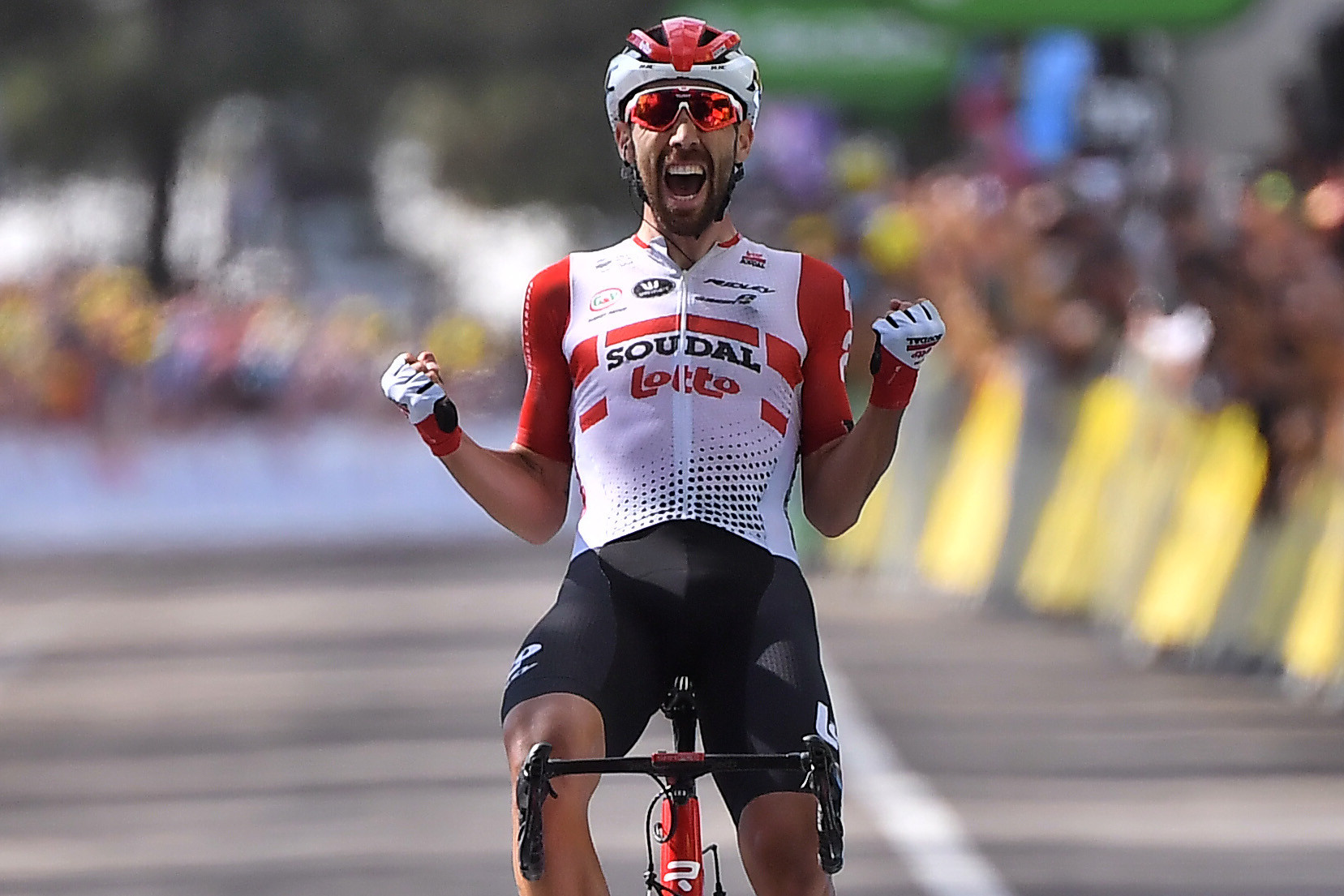
Perhaps the best example of this came on stage eight of the Tour, a hilly parcours taking in 200km from Macon to Saint Etienne. Eventual winner Thomas De Gendt took a shade over five hours to reach the finish line, having originally led a four-man breakaway group from the off before eventually grinding down his fellow escapees to take victory.

Back in the main pack, surprise race leader Julian Alaphillipe, who would go on to make headlines for his swash-buckling defence of the yellow jersey, re-claimed the overall lead of the race after attacking the main group of favourites in the final kilometres, joined by fellow Frenchman Thibaut Pinot, who effectively staked his claim for the overall win.

Coming right at the end of a long day where, to the uninitiated, nothing much was happening, this moment of action created a frantic, pulsating finish to the stage, as heroic breakaway artist De Gendt dug deep to claim the day’s win and hold off the two home heroes. Watching the gap ebb away on the TV broadcast was unmissable viewing, with multiple questions to be answered before the day was out – would De Gendt claim the deserved win? Would Alaphillipe re-capture the overall lead? Did this mean that Pinot was the most likely to claim overall victory in the remaining stages of the race?

As it turned out, this was just a skirmish in an ultimately classic war – further highlighting the difficulty of condensing three week’s action into a single package and the joy of following the theatre throughout its entirety.

There is a lot to be said for the accessibility of taking sport’s best bits and presenting them in a way that appeals to a wider demographic. Expecting everyone to want to sit down and commit to hours and hours in front of a TV screen or in a crowd might be a thing of the past, creating an understandable fear of declining audiences and reduced advertising revenues as a result.

However, protecting the extended formats of sporting occasions remains essential to maintaining their significance, and hopefully 2019’s rise of the longer occasions will go someway towards stemming the tide of further T20-ising among sport administrators and marketers.

Welcome to sixteeneightyone

sixteeneightyone is the home for copy, content and articles from Andy Gardner.

Mainly focused on sport, sixteeneightyone is essentially a series of blog posts looking at themes, issues and stories from a number of different sports, demonstrating the author’s interest and passions.

Andy’s main interest are in football, cycling and triathlon, but he follows many other sports closely with interest. When not writing or working on his day job, Andy spends his time training for triathlon and running races, which you can read about via his personal blog The Difficult Second Marathon.

Through his work experiences, Andy may also write about education, leisure or hospitality.

As a blog, the actual content and subject matter of these posts may change over time, making this site effectively an online portfolio of writing and longer form content, designed to add depth, opinion and colour.

Andy can be followed on social media via the following platforms: –

Twitter: @AndyGardner81
Instagram: @andygardner81

Or you can email a_gardner16@yahoo.co.uk

The bottom line: this blog is not about what the author does, but what he’s interested in.