Sweet like chocolate: Swiss-style Champions League league phase nears conclusion but what have we learned?

Ahead of next week’s fixtures in the catchily-titled Champions League League Phase, we find ourselves five-eighths of the way through the new “Swiss-style” model, making now as good a time as any to review its impact so far.

Prior to the new format being rolled out this season, there was much consternation and gnashing of teeth about what it might bring: the huge new table, more fixtures and almost certainly heavier defeats for the European game’s “lesser” lights.

As it turns out, that hasn’t really been the case. There have been some hefty drubbings dished out, such as Bayern Munich’s 9-2 win over Dinamo Zagreb on matchday one or Borussia Dortmund crushing Celtic 7-1 on matchday two, but on the whole, there have actually been more surprise scorelines than might have been expected.

Results such as Monaco beating Barcelona 2-1 (although Barça’s recent travails made that one not a huge shock), Lille claiming the scalps of both Madrid sides on consecutive matchdays or Sporting overcoming the loss of head coach Ruben Amorim to beat Manchester City 4-1 on matchday four.

It is still hard to predict the final outcomes of the 36-team super-table, but it is clear that some clubs have struggled to meet their historical best – specifically Manchester City, Real Madrid and PSG, with the Parisians looking to be in the most peril.

However, with three games still to play, it is still hard to see all three clubs not making their way through to the knockout stage, even if they find themselves in the play-off stage rather than leapfrogging straight to the final 16.

PSG look at most risk, but with games to come against RB Leipzig, who are set to be the League Phase’s biggest casualties, Manchester City and Stuttgart, who have also underperformed, seven more points looks plausible, which would mean 11 for the final standings and probably a play off spot.

Meanwhile, for Madrid and Manchester City, the competition’s last two winners, of course, a further five points should do the job. Madrid do have to face Italian league leaders Atalanta in their next fixture, but with points already in the bag and games against RB Salzburg and Brest, currently defying expectations in 11th spot, they should be ok. Same goes for City, who despite a terrible run of form domestically should still progress comfortably – they have 8 points to their name and games coming up against Juventus, PSG and Club Brugge.

So while Liverpool, with five wins from five, peer down from the top of Mount League Phase, what does this all tell us? Well, not much more than the previous format, in all honesty.

We’re still most likely to see the “biggest” clubs in the knockout phase, despite the odd travail and  blooded nose along the way. Even if there is a surprise elimination at this stage, that happened in the past too – just last year, we all chuckled heartily at the ongoing malaise at Old Trafford as Manchester United came last in their group. Milan, Newcastle and Sevilla were also among the list of clubs from the big five leagues that failed to make the knockout stages.

If anything, the new format has killed off the previous format’s most egregious failing – that which saw group stage failures rewarded with a parachute into the knockout stages of the Europa League. This at least makes the second and third tier competitions ‘cleaner’ – no last-minute super club additions to swoop in and steal the silverware. Or Sevilla, just for a change.

There is also the argument that more teams in this pre-knockout phase has meant more opportunities for “smaller clubs”, with teams such as Dinamo Zagreb, Club Brugge and – with apologies for highlighting Scottish football’s place in the world – Celtic in with a chance of making it through. However, getting to the play-off round is in effect the same as making the final 32 (ie, a play-off to reach the round of 16), so all the new format is doing is eliminating an extra four teams, which at the moment are likely to be Young Boys, Slovan Bratislava, RB Leipzig (all on zero points) and Bologna (one point).

Should those faltering big clubs make the play-off round, they will then face a two-legged tie against one of the other teams outside the top eight. This play-off is seeded, with the teams from 9-16 drawn against opponents from 17-24, so based on current standings Madrid could face Milan, Benfica or Bayern – or they could be paired with Lille or Brest, who have already sprung surprises in this competition.

This kind of proves the point that this complicated league phase has changed nothing – the competition only really gets going when it reaches the knockout phase, bringing with it the element of unexpected clashes that really matter, with no safety net for underperforming losers.

Instead, all we have really seen from the bloated group stage is more ultimately meaningless encounters between the biggest and richest. So far we have seen Inter beat Arsenal, Barcelona beat Bayern heavily and Liverpool win at Milan, but so what? None if it matters at this stage.

It’s all just the biggest clubs swelling their already stuffed coffers with more cash. More matches as content and more eyeballs and flashy social media highlight reels.

Any stories that have been created so far have centred around negative narratives associated with the names we already know – Mpabbé’s struggles in Madrid, Guardiola’s head-scratching at underperforming City or Slot’s machines taking the table by strorm. There has been practically zero spotlight for Monaco, riding high in 8th, or Brest punching well above their weight. It would have been fantastic to learn more about clubs making headlines like this, but there’s no oxygen for them among all the noise of the big boys chasing clicks.

No one is suggesting that the previous format was loved and created endless classic clashes – the truth instead was a bundle of dead rubbers towards the end of the group stage and maybe one or two games that really mattered. But at least it was over sooner – this seemingly endless League Phase will still be live in the last week of January, meaning extra complication as the transfer window creeps towards slamming shut.

The previous format felt like what it was: a preliminary series of fixtures that ultimately weeded out the sides expected to be eliminated while also creating revenue and security for the biggest clubs. By contrast, the new format does this too, but with less clarity, more meaningless games and with greater threat to the rest of football, portending towards the inevitable European Super League, where inconsequential mid-table clashes between Atleti and Juventus will be the norm while also further distorting domestic leagues by channeling funds to only one club from countries like Denmark, Belgium or Slovakia.

Knockout football always was and always will be the great leveller in football; any team can beat any other on the right day and in the right circumstances, even over two legs. Minimising that format in favour of an expanded league system reduces the risk, creating more opportunities for recovery. And the bigger the league, the more fixtures it creates, the greater the safety net. It only serves to close the shop further, reinforce the exterior window and stretch the arm at which the rest of football is held at bay.

The biggest clashes on famous nights in European competitions always felt so important because they happened so rarely – supply and demand exists in football as in economics, so scarcity increases value. Just spamming the fixture list with more games between the biggest names only makes those encounters less significant in the long run.

No doubt this format will appeal to many fans by creating more fixtures between the biggest clubs, but you really can have too much of a good thing. A dash of syrup in your coffee can add an extra sweet hit, but if you’re already serving yours with multiple spoons of sugar, swirly cream and and a chocolate flake, then you’re probably only heading towards diabetes.
It may have been Messi’s World Cup, but this will soon be Mbappé’s World

Argentina’s win in Qatar was the perfect way to complete their captain’s career, but the match itself showed that the game’s next great is very much already here.

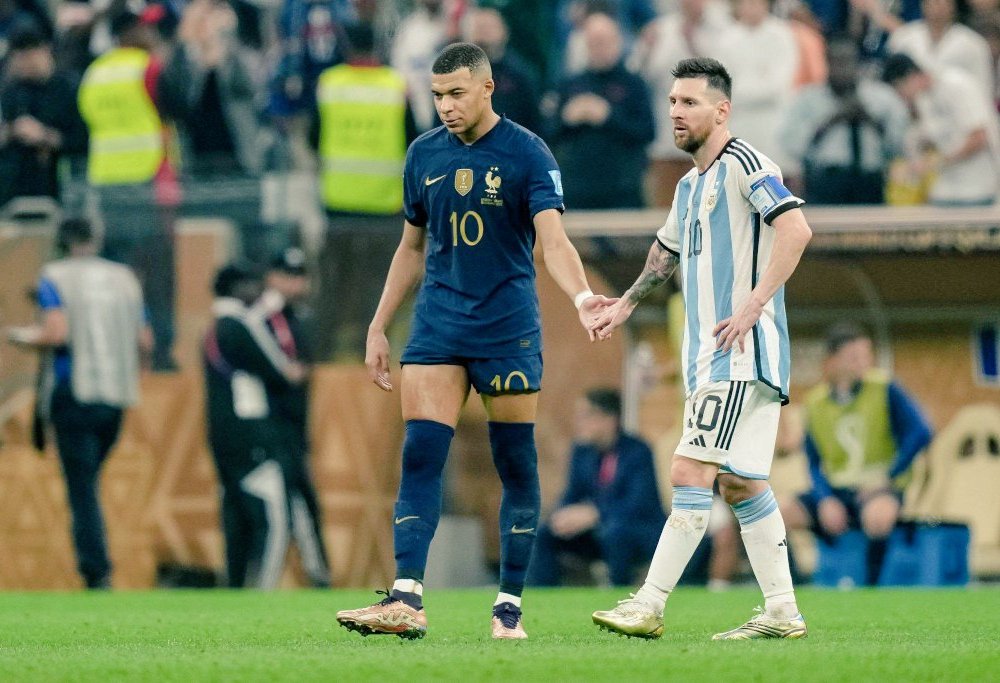
Lionel Messi, cloaked in the ceremonial Bisht placed on his shoulders by the Emir of the host country, Qatar, collected football’s most iconic trophy and made his way across the temporary platform created for the tournament’s final moment.

As he raised the World Cup, surrounded by his Argentina team-mates, showered in confetti and set against a backdrop of fireworks, arguably the game’s greatest ever player could finally say he had done it all; he has collected all the infinity stones, discovered all the rings of power and even answered the art and literature question to complete a full set of cheeses.

He has done it all and in some style.

While the man once known as ‘The Flea’ may not have been as central a figure in this particular game as he has on so many occasions in the past, he is still the man for the big moments, including all three of Argentina’s goals in this final. It was his penalty that opened the scoring, his neat pass round the corner that sent Alexis Mac Allister in behind France’s defence to create the second and then his sense of presence to be in the right place, at the right time to convert Lautaro Martínez’s rebound and give his side the lead in extra time.

Throughout the tournament, he was the man who gave his side something extra, whether that be on the ball, such as his evisceration of Croatia’s rising star defender Joško Gvardiol in the semi final or in leading his side in the face of adversity, like losing their opening match or seeming to grab defeat from the jaws of victory in the quarter finals against the Netherlands.

But despite being the ultimate victor, Messi certainly couldn’t claim to be the only star of this World Cup final. While his Argentina squad were celebrating their success, France’s leading man, Kylian Mbappé was already looking ahead to a joyous bounceback in four years’ time – or in his own words, tweeted after the match: “Nous reviendrons.” We will return.

For the first seventy minutes of this match, there was only likely to be one winner. Argentina hardly put a foot wrong in the first half and were excellent value for their 2-0 lead at the break, while France looked completely absent and seemingly sunk without a trace, making two substitutions before the interval.

Changing shape might not have had the immediate impact that French coach Didier Deschamps may have hoped for, but eventually the tide turned, powered by 120 inspirational seconds from Mbappé, first scoring from the penalty spot, before finding the net with an outstanding volley to set up a dramatic final 10 minutes.

At this point, the momentum was all with the French, whose changes saw them pack the field with powerful and pacy forwards, stretching the tiring Argentines with every attack – that they were able to resist the French offensive and re-take the lead in extra time is testament to their own collective will and a demonstration of the see-saw nature of this clash.

In converting his second penalty of the night and levelling the game at three apiece, Mbappé became only the second man in the history of the game to score a hat-trick in a World Cup final, in addition to claiming the tournament’s golden boot. He went on to score his third penalty kick of the evening in the shoot-out, but it still wasn’t enough to overturn Argentina.

The way France’s talisman showed up in this game just when he was needed speaks volumes – given the circus that surrounded his hotly-tipped summer move to Real Madrid, which ultimately never happened, there has been growing criticism of Mbappé’s character and his role at PSG, with many casting him as de facto sporting director, influencing the club’s transfer policy and tactical approach to suit his own game. It could have been easy for him to sulk out the closing minutes of this final, throw away his runners-up medal and move on, but, thankfully for those of us in search of a dramatic twist or turn, that wasn’t to be the case.

It’s easy to forget that at 24 years old, this is the PSG forward’s second World Cup final, having effectively announced himself on the global stage in Russia four years ago, scoring the crucial fourth goal against Croatia – a strike which made him only the second male teenager to score in the game’s showpiece clash, an accolade shared with football’s original great, Pelé. That said, his goal in the 2018 final came a full year after completing a move from Monaco to the Paris club in a deal that eventually would be worth €180 million, so this was hardly an unknown hero enjoying a moment in the sun.

In that tournament, his pace and direct running struck fear into the hearts of opponents, most memorably against this year’s vanquishers, Argentina, in the round of 16, when his searing break through the heart of the opponents’ defence saw him eventually hauled down for a penalty that set the tone for the encounter. He would go on to find the net twice afternoon, both with neat finishes, to show his coolness in front of goal to match the physical prowess.

Having been pictured returning to training with his club earlier than instructed, it is clear that he means business and is ready to get straight back into action, hoping to add to his 19 goals so far this season. At club level, the aim for Mbappé and his PSG team-mates must surely be the much-coveted Champions League title, an aim which has thus eluded the club owned by the Qatari state, who have backed them to the hilt financially. With 147 goals from 197 appearances, he is well-set to become one of the game’s all-time greats and to amass an incredible collection of silverware.

From an international perspective, a winter World Cup means that the next major tournament, the European Championship, is now just 18 months away. Qualification for the tournament finals in Germany begin in earnest in March with France early favourites, giving Mbappé and co. plenty to focus on.

Looking ahead to 2026’s finals in North America, should he and France successfully go one step further and win the whole thing, Mbappé could become only the second man in history to feature in three World Cup finals and the first to play in three consecutively. Obviously much can change in the space of three and half years, but he is, without doubt, the focal point of France’s entire team structure and it’s hard to envisage his nation lining up in Canada, USA & Mexico without his name among their ranks.

Coming into Qatar, Deschamps, who has yet to confirm whether or not he will continue in charge of the World Cup runners-up, saw his squad suffer injuries to a number of key players, including stars like Paul Pogba and Karim Benzema. In a way, the injury to Real Madrid forward Benzema – who currently holds the Ballon d’Or as the world’s best player – coming as it did right on the eve of the tournament, may actually have helped les Bleus in the short term, removing any potential doubts over who might be this team’s leader and totem.

Surrounded by emerging talents such as Eduardo Camavinga, Randal Kolo Muani and Aurélien Tchouaméni, as well as experienced support like Antoine Griezmann and Raphaël Varane, Mbappé was the stand out, world class figure in an already-strong squad that looks well-set for the future.

While we should certainly be celebrating the incredible career and talent of Messi, whose crowning glory ensures he receives the adulation that comes with adding the World Cup to his personal palmarés, this final may come to be remembered as a passing of the baton and a shift from one generation to the next.

We already knew that Mbappé had everything to be the best in the world; his performance in defeat in Qatar just confirmed that he could bring it to the surface when it matters most.

A full week in to a World Cup that creates conflicted feelings and leaves a sour taste

Choosing Qatar to host a global party event like the World Cup was always going to be controversial and raise a number of questions. What were those involved hoping to achieve and where does football go from here?

With a shade over a week now passed of this most unusual World Cup – and over a third of the total games played – it certainly feels like no other major tournament, even as a viewer from a distance.

On the field, it has been the World Cup of shocks; landmark wins for Saudi Arabia and Japan against global heavyweights Argentina and Germany respectively, while other heavily-backed sides, such as Belgium and the Netherlands have yet to set the tournament alight as might have been expected.

France look strong, as do Brazil; Spain have started spectacularly with a 7-0 win while England have already scored six in one game as well as being outplayed in a 0-0 draw with the USA. Generally, the football has been ok – some really closely contested games, more goalless draws than you’d like but on the whole, not bad.

However, even with the football well underway and the tournament taking shape, this is still an event where the action on the field takes a back seat to the wider issues. Prior to the start of the tournament, it was impossible to avoid discussion and analysis of how we came to find ourselves gearing up for a winter World Cup in a tiny desert country with no history or tradition of football.

While the World Cup might not be the pinnacle of football any more thanks to the growth of the Champions League, Premier League and other major competitions in Europe, it still holds a special place in the heart of fans from all corners of the Earth. From a personal perspective, watching the World Cup was where my own passion and love for the game began – in 1990, aged just eight, I knew practically nothing about football, but took it to heart during that summer, watching England reach the semi finals and then discovering that there are lows to accompany the highs.

Eight years later, France ’98 came at a time when my own passion for football was probably as great as it ever would be. I loved that tournament and the players who lit it up – Davor Suker’s goals, Dennis Bergkamp’s winner against Argentina and Zinedine Zidane’s midfield artistry for the hosts. Even now, if I stop and think of a time where I most enjoyed and devoured football, it was that World Cup.

Unfortunately, it is that scale of universal appeal that makes football in general and specifically the World Cup such a valuable target for corporations, governments and individuals to launder their reputation. Both the current World Cup and the 2018 edition in Russia have been used cynically to achieve governmental goals, facilitated by FIFA, a governing body brought to its knees by a series of investigations and corruption allegations.

Both these two tournaments were awarded to their respective hosts in 2010 after ballots held by among FIFA’s Executive Committee. Watching the Netflix documentary FIFA Uncovered just before this World Cup started was illuminating, detailing the scale and depth of corruption among the halls of power in the governing body, where practically every major decision could be connected to illegal payments in order to grease the wheels and gain favour.

Winning the right to host the 2018 World Cup was a key element in Russian President Vladimir Putin’s plans to stoke nationalism at home and develop a siege mentality among the populous. Alongside the country’s hosting of the 2014 Winter Olympics, where Russia were subsequently exposed for running an industrial-scale doping programme, organising the World Cup went some way to cementing the country’s place on the global scene – while still annexing Crimea in 2014, which started the chain of events that led to this year’s full-scale invasion of Ukraine.

Qatar’s motives for holding the 2022 World Cup are almost certainly less aggressive, but they are still surely rooted in political ends. Qatar is a small country in the Gulf with huge access to valuable energy resources but difficult relations with its near-neighbours, Saudi Arabia and the United Arab Emirates. Going back to before the decision was made to award Qatar the World Cup, the country’s ruling monarchy made a series of plays aimed at gaining a place among the world’s more established societies, most notably France and the UK, often through deals for arms and fossil fuels.

However, the country’s rulers also recognised sport as being an incredibly powerful way of improving their global reputation and fast-tracking a route to rubbing shoulders with the big boys. The country rapidly invested in facilities and overseas expertise through its Aspire academy, looking to provide local athletes with the resources and access to develop their skills and eventually compete with the best in the world.

Over time, those facilities have also played host to multiple global sports events, including the Asian Games and Athletics’ World Championships. Alongside this internal investment, Qatar have sought to gain profile globally by investing in sponsorships, shareholdings and ownerships of European sports giants – perhaps the best known being the purchase of Paris St-Germain in 2011 and multiple sponsorship deals through the state-owned Qatar Airways, including Barcelona and Bayern Munich.

The deal to buy PSG in particular has created many headlines for the country’s government, some positive and some negative. Through a sustained but haphazard strategy of signing some of the game’s best-known players at huge cost, including Neymar from Barcelona for a world-record fee and Kylian Mbappé from Monaco, a pair of deals that undoubtedly inflated the entire transfer market since, PSG have become something of a universal enemy in European football. They consistently win their domestic league by a large margin, while seeming to flounder at a continental level, much to the enjoyment of anyone disagreeing with The Project.

Reports have suggested that buying PSG and then pumping millions of dollars into the French domestic league through a television broadcast deal with Qatar’s state-owned broadcaster beIN Sport was part of a developing partnership between the two countries that went beyond sport. When Qatar Sports Investment (QSI), the vehicle handing out the money, secured the deal to buy the Paris club, it required the blessing of Michel Platini, former superstar of the French national team and then President of Europe’s governing body, UEFA, as well the Republic’s President at the time, Nicolas Sarkozy.

Just a year previously, Platini, a member of FIFA’s Executive Committee and therefore instrumental in the voting for choosing a World Cup host in his role as head of European football, had surprised many onlookers by seemingly changing his mind at the very last moment and choosing Qatar over the USA, as he had been expected to do. Platini would go on to be banned from football administration for life following a series of unexplained payments from FIFA President Sepp Blatter, a judgement which continues to be contested by both.

When the ExCo chose Qatar to host the World Cup, it went against the recommendations of the organisation’s own experts, who felt that the country did not have the infrastructure to hold the competition and also that it would be impossible to play the tournament in its traditional June/July calendar slot.

Qatar is roughly the size of Devon and Cornwall combined with a total population of just under 3 million, which is approximately the same as Greater Manchester. Of those 3 million, around 76% live in the city of Doha, with much of the rest of the country being uninhabitable. In a typical July, the temperature rarely falls below 35° during the day and averages around 42°, meaning that a switch to a winter World Cup was always certain, despite the original plans of the organising committee. Eventually, FIFA decided to move the tournament to the winter in 2015.

Of the eight, air-conditioned stadiums being used for the World Cup, seven had to built from scratch and will mostly be demolished and sold off for parts when the tournament finishes. With roughly 1.5 million people visiting Doha for the tournament, this was likely to be an unprecedented level of influx for the country, which required the construction of hotels, a metro system, a port and a myriad of temporary accommodation. It would also require the complete remodelling of downtown Doha and the construction of effectively an entire new city in the shape of Lusail, the district which will eventually host the World Cup final.

In total, the construction projects required to facilitate the World Cup are estimated to have cost $220 billion dollars – more than all the previous World Cups and Summer Olympics combined, such is the scale of the work needed to host this event.

To complete all that work in such a short space of time and with such a small population, it should come as no surprise that the country has needed to import practically the entirety of its workforce, at immense human cost – it is thought that 6,500 migrant workers have died during this project, with zero compensation for their families. While the controversial Kafala scheme for controlling migrant workers has been repealed during this time, there are still many questions being asked about the rights of those involved in building this World Cup and the lives lost along the way.

As a conservative, Muslim country, Qatar has strict laws in place regarding, amongst other things, consuming alcohol, homosexuality and women’s rights. As the world’s most popular sport, football is enjoyed all over the globe in a variety of different ways and is open to everyone, regardless of race, religion or sexual preference. Choosing to bring the World Cup to a country like Qatar creates a problem in this respect – as FIFA have tried to maintain in the run up to the tournament, everyone is welcome to visit and watch the tournament, but you will need to respect the local laws while doing so. That’s fine, but in a country where it is illegal to be homosexual, you are effectively asking people to be something they’re not in order to watch some football.

The sale and consumption of alcohol is also an issue, even if perhaps not quite so at odds with individuals’ fundamental existence. Having a beer at or before the football isn’t quite a right, but it is an essential ingredient in many fans’ matchday experience. Add to that the last-minute change of plan from the organisers to ban the sale of alcohol from stadium perimeter areas, and you get a sense that this is a country whose values are very much at odds with much of what makes up a typical football match event.

Perhaps if these things and these people go so strongly against the laws of a country and the beliefs of its people that your visitors must change their behaviours and hide their identities, maybe it wasn’t such a great idea to invite them in the first place.

Prior to the tournament, the scale and number of investigative reports into the Qatar government’s approaches to human rights and what might lie in store for visiting fans went through the roof, with players and teams planning to show their support for those affected (often through minimal-effort gestures, in all fairness). On the eve of the first game, we saw the bizarre press conference from FIFA President Gianni Infantino, where he attempted to show empathy for all those groups affected, but ultimately drew a parallel between racial abuse and having freckles while also suggesting that Europeans should spend 3,000 years thinking about their own nations’ past crimes before questioning how Qatar treats people today.

And don’t forget the last-minute decision to threaten players with unlimited sanctions if they chose to wear the unauthorised One Love armband in support of LGBTQ+ rights.

Weighing all of this up makes the decisions taken to arrive at a World Cup in Qatar look questionable at best. This is a country with no history or tradition of football and no real experience of tourism on the scale needed for a major tournament. It is a traditional and conservative country with laws rooted in religion that clash with the culture and nature of football and its supporter base.

In order to bring the tournament to Qatar, it has required changes to the global footballing calendar that will take multiple seasons to unravel, impacting the players involved by adding travel and playing time to their schedules, risking burnout and injury, while leaving players not taking part in the tournament without games for a month.

The scale, size and cost of hosting a World Cup – or Olympics, for that matter – has spiralled beyond the reach of most nations in recent times. It’s no surprise that we now live in a time where the only countries capable of hosting a major sporting event on their own seem to either be controlled by a dictator with an agenda to serve or a petrostate with bottomless pockets (or maybe a government willing to saddle its people with near-eternal debt to service). In future, there surely needs to be a re-think of how major sports events operate and how to make them accessible to more nations.

In the meantime, we’re stuck with the conflicting emotions created by the Qatar World Cup. Obviously we love the action, the football and the drama it brings. There is a purity to international football, protected, to a degree, from the financial disparity that taints the club game and brings a very different spectacle where success cannot just be bought, even if the tournaments themselves seemingly can be.

We want new memories to be made, both for ageing fossils like me and for the next generation of fans so they can forever treasure their own versions of Italia ’90 or France ’98. But we surely cannot allow the sport’s governing bodies to again sell out the game’s crown jewel for their own benefits and for the sportswashing agendas of governments, like it has with this edition.

In my opinion, there is absolutely no way that Qatar should have been chosen to host this World Cup – the financial and human cost of essentially building an entire host venue practically from scratch is not sustainable in any way and can only leave a negative legacy for everyone involved. Not to mention the environmental impact of all those air-conditioned stadiums and flying fans in and out of the country to watch their teams in action.

So on we go, watching the football while placing asterisks next to everything we see. It’s hard to imagine that this is the impact the Qatari government and its people wanted from welcoming the world to its door.

Erling Haaland’s incredible start and what it might mean for the Premier League’s future

The summer transfer of Erling Haaland to Manchester City may have generated plenty of debate at the time about what this transfer would mean for the future of the Premier League and the wider football ecosystem. Would this make the Manchester club unbeatable domestically and finally take them to the European success they have coveted for so long?

In the time that Pep Guardiola has been in charge of the club, they have developed a finely-tuned, highly structured system, playing to clearly defined patterns and in a style befitting of the Catalan coach and his previous work at Barcelona and Bayern Munich.

Adding the giant Norwegian goal machine to this perfectly-constructed side represented something of a risk at the time; how would he adapt to their style, given his own previous form for offering relatively little in build up play and essentially being all about finding the net? In turn, how would Guardiola adjust his own, firmly-set dogmas around midfield play to accommodate the archetypal number nine, a role often eschewed by City in favour of additional midfield schemers, ignoring the obvious success of Sergio Agüero, himself a very different striker to Haaland.

With 20 goals from his first 12 games, Haaland has enjoyed a near perfect start to life in the Premier League. In addition to scoring hat-tricks in his first three home games, he seems to have struck up a fantastic relationship with City’s key man, Kevin De Bruyne, as well as assisting three goals and linking up superbly with Phil Foden.

On the surface, it should hardly be seen as a huge surprise that a man of Haaland’s ability is thriving playing for a team as strong as City, who have won four of the last five Premier League titles. However, adding a player of his profile to the team’s patterns will have been far from straightforward, so the speed at which everyone involved as hit their stride is remarkable.

By comparison, in response to Haaland’s move to Manchester, recent rivals Liverpool invested heavily in their own number nine, signing Darwin Núñez from Benfica. Since arriving, the Uruguayan has already experienced ups and downs – after scoring in the Community Shield and on his Premier League debut, he was then sent off against Crystal Palace and banned for three matches, stalling his start to the campaign.

And while he did return to the scoresheet in Sunday’s action-packed encounter with Arsenal, Liverpool manager Jürgen Klopp will no doubt have been hoping for a stronger start to Núñez’s time on Merseyside.

Perhaps even more significant, however, has been the impact of the striker’s arrival on the rest of the Liverpool side, who currently sit tenth in the early Premier League table, having lost twice and drawn four times already.

At their energetic best, Klopp’s Liverpool have plundered goals from the wide players, particularly Sadio Mané, whose presence has been sorely missed since his summer move to Bayern Munich, and Mohamed Salah, who has only scored two Premier League goals so far this campaign.

Implanting Núñez into this Liverpool team seems to have had a noticeable effect on Salah’s form – this time last year, the Egyptian winger was imperious, scoring great goals and plenty of them. Drifting in from the flank to take up threatening positions in the inside forward channel or just as happy bringing the ball in from wide to create his own chances, Salah was seemingly unstoppable – at least until his domestic form took a back seat during the African Cup of Nations.

Since then, Salah has been without doubt a less potent force in Liverpool’s attack and the addition of Núñez seems only to have further blunted his threat, forcing him wider and deeper, even when Roberto Firmino or Diogo Jota have been leading the line.

Liverpool seem to have lost much of the balance and structure that has made them so effective in recent seasons, with much debate around the role of Trent Alexander-Arnold defensively, where previously the conversation was only about how superb he was as a creative force. Instead, it now seems that the Anfield side are struggling at both ends of the pitch, forcing the entire team to sit deeper and rely on moments of individual brilliance rather than the elite-level team ethic and relentless pressing that took them so far.

This is in stark contrast to City, who seem to have had no problem at all in evolving their play to thrive on the direct running and penalty box poaching of Haaland. If anything, his inclusion in the side may have created additional space between the lines for the likes of De Bruyne, Foden and Jack Grealish, who has posed more of a threat this season than during the last.

Prior to signing Haaland, City shipped out two other forwards the shape of Raheem Stirling an Gabriel Jesus, both of which may have competed with the Norwegian for space in behind opposition defences, alleviating the kind of issues that Liverpool have encountered with Núñez and Salah.

When you consider how deep most defences sit when trying to nullify City, it is even more impressive that they are able to carve their way through so effectively and regularly create the chances on which Haaland is thriving so. In fact, watching this City team in full flight is nothing short of thrilling, knowing that they can – and usually do – score at will. How long that kind of feel-good factor persists is another question, because if the Premier League is headed into Bundesliga/Ligue 1 levels of domination, it is hard to see this being enjoyable forever.

That in itself raises a series of questions about what comes next. One of the main selling points of the Premier League product (excuse the vile rhetoric), has been the unpredictable nature of the competition – the self-styled ‘best league in the world’ requires that any team can beat any other on any given day. Of course, this has rarely been actually true, hence why the title is usually claimed by one of three, at a push four, clubs, but the promise of unforeseen events is enough to feed the narrative beast.

Without the phenomenal start made by Arsenal this season, the Premier League would already look much like a case of when City would claim the title rather than if – Guardiola’s side have scored ten more goals than other side so far after just eight or nine games and no-one has conceded less. They also comfortably have both the highest expected goals for and lowest against, running teams ragged with seeming ease and providing threats from all angles.

Perhaps one element of uncertainty in this season is the unprecedented mid-season break to accommodate the winter World Cup in Qatar. It’s impossible to predict how this will affect all involved, both on an individual level and in terms of their roles within their respective teams, other than speculating that those with the biggest and deepest squads will probably deal with it most comfortably.

Alternatively, will those players not involved in the World Cup, including Salah and Haaland, suffer from having their season disrupted for a month? How will they handle returning to action and maintaining their form?

If the current form of City and their rivals continues throughout the rest of this season, neutral followers will be hoping that Arsenal can continue their imperious start to the campaign and maintain a title challenge.

Otherwise, the only topics of conversation for the rest of this season will be around the goalscoring feats of Haaland and just how many records he can break. Having already become the fastest player to reach 10 and 15 goals, he will no doubt have his sights on the Premier League records for a season – 32 in a 38 game campaign and 34 in a 42 fixture calendar. He may even be eyeing up a record that many think could stand forever: Dixie Dean’s 60-goal season in 1927-28 – on current form, Haaland is on course to score 63 times this season, although surely he cannot maintain that level of lethality.

Can he?

Real Reign Supreme: Europe’s Most Elite Club Stay On Top

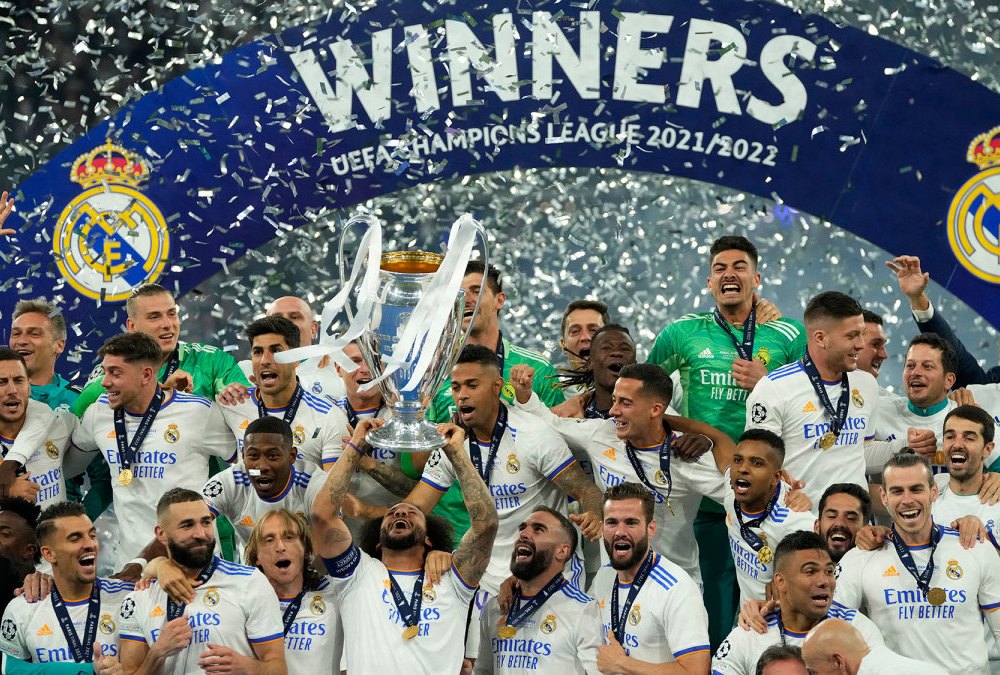
When Vinícius Junior found himself in space to find the net with what turned out to be Real Madrid’s sole shot on target in the entire Champions League final on Saturday evening in Paris, it felt strangely inevitable yet also something of a surprise.

That moment in itself was essentially a condensed version of Real’s entire campaign – while it seems far-fetched to view the competition’s most successful side in history, now having won European club football’s highest honour 14 times, as something of an underdog, that is kind of true.

Perhaps a more fitting characterisation would be of old-money establishment putting the new-money upstarts in their place, with a run to the final that included victories against Paris St Germain and Manchester City either side of eliminating sanction-stricken Chelsea. In all three of those two-legged ties, this Real side, packed with ageing superstars seemingly playing on beyond their best, somehow found a way to get past their opponents when it seemed impossible.

In each of those knockout ties, Real were seemingly dead and buried, from turning the PSG tie around in the last 30 minutes, through taking the Chelsea quarter final to extra time and on to that incredible stoppage time flurry against City when 3 goals in the 90th minute turned a 3-5 deficit into a 6-5 win on aggregate. That this team keeps finding paths to victory in all those circumstances speaks volumes for the mentality of their players and coach, Carlo Ancelotti.

Once again, in this final against Liverpool, defeat looked most likely but thanks to a combination of an outstanding goalkeeping performance from Thibaut Courtois and a collective determination to keep soaking up pressure, this team kept Jurgen Klopp’s Reds at bay before exploiting one of few potential gaps in Liverpool’s defence – namely the possibility of finding space behind star wing-back Trent Alexander-Arnold – to score the game’s only goal with half an hour still to play.

Coming in to the match, a Liverpool win looked the most likely outcome; Klopp has assembled a fantastic team built on hard work, collective excellence over individual brilliance and the forcing of errors through intensity. The creative genius of Alexander-Arnold, the explosive pace and goalscoring feats of Mohamed Salah and the silky-smooth assurance in defence of Virgil van Dijk – there’s no doubting that this side is among the very best – which also shows just how good the current Manchester City side is to shade them in the Premier League title race.

However, there’s just something about this Real team – whether it be the experience of Toni Kroos, Luka Modric and Casemiro in midfield, the explosive talent of Vinícius out wide or the scruff-of-neck number 9 play of Karim Benzema, they just keep finding a way to navigate through almost any situation to victory.

Surely much of the praise deserves to go to Ancelotti; this time last year, the Italian had led Everton to an un-noteworthy 10th place in the Premier League, raising questions about his future and perhaps signalling the end of his time at the top table of coaching. When he resigned from his post at Goodison Park to return to the Santiago Bernabeu, many eyebrows were raised, with few expecting him to succeed in the shadow of Zinedine Zidane, despite his second spell in charge of the club having failed to live up to the success of his first, when they claimed a hat-trick of Champions League wins.

This latest success makes Ancelotti the first coach to win the Champions League on four occasions – twice with Real and a further twice with AC Milan. In addition, his record of having won domestic league titles in Italy, England, France, Spain and Germany demonstrates his ability to adapt and develop a winning formula wherever his travels take him. In a footballing world of philosophies and blueprints, where winning isn’t always enough and defining a whole new way of playing the game seems to be desired, Ancelotti’s style seems to be a far more basic one: just win. With style, if you can.

That has been exactly what Real have brought to this year’s Champions League campaign – when the odds have been against them, they’ve managed to stay in games and force their way back into contention, maximising their steadfast belief that they would ultimately come out on top. Benzema in particular has stood out in this team, free at least from his role as Ronaldo’s wingman; his first-leg hat-trick at Stamford Bridge was the highest of highlights, but Modric and Kroos are equally as essential to Real’s success with their unwavering consistency and ability avert danger by shifting the play from one area of the pitch to another under pressure. As a midfield pairing, their understanding of the space they occupy and how to find more elsewhere without sacrificing possession is unrivalled, helping Real avoid the unforced errors that Liverpool impress upon most.

Perhaps on another day, Liverpool might have scored from at least one of their first half opportunities and put this game to bed. Had that have been the case, however, this season’s form suggests that Real would probably still have clung on in this final and again managed to snatch an unlikely victory. As it was, the longer this game went without a goal, the more visibly Liverpool became frustrated and the more a Real win looked on the cards.

When Federico Valverde’s cross found its way to the net via Vinícius’s well-timed run and finish, it felt beyond one of those entirely predictable moments that turn games and more akin to the exertion of will by an empirical force. That sense of the established power ruling through tradition and entitlement, manifested in this case through unwavering confidence in their ability come out on top. They just know that they will ultimately win, so they do.

As a result of their historical success in the European Cup and Champions League, no other club is as closely tied to the competition than Real. This in itself is hugely ironic when you consider the role played by the club and their president, Florentino Perez, in trying to kill UEFA and its flagship tournament by forming and flogging the European Super League fiasco a little over 12 months ago.

So after all, despite that attempt at a coup de t’at last spring, European football’s most haughty member of the establishment were able to flex their muscle on the field when it mattered most and keep their hands on the sport’s biggest prize, which does make it difficult to totally commit to their underdog, against-the-odds journey to lifting the trophy.

Just when you think this team, this club and perhaps even this category of super club – lacking the bottomless pit of petrodollars of their rivals – has done all it can and reached the end of the road, they somehow find a way to stay in the game, stay in the competition and stay relevant in the sport. The bloodline continues, the monarch refuses to die and the Champions League’s kings just keep on winning.

Everything Still to Play For in Dramatic Third Tier Finale

Plymouth play host to MK Dons in a final-day fixture with many issues left to be settled and multiple potential outcomes.

As League One enters its final week, it is not exaggerative to say that this season has been like no other. While it looks as though Wigan Athletic should secure the title and climb to the Championship, a host of permutations, some more likely than others, mean they could still finish outside the top two and miss automatic promotion all together, while four sides competing for three play-off berths are separated by just one point point and only two goal difference.

Normally it would seem hyperbolic to suggest, but it is practically impossible to predict what might happen.

The Latics could have secured promotion at home to Plymouth Argyle on Saturday, but were held to a draw that saw the visitors reach 80 points, a figure they share with Sunderland and Wycombe Wanderers, which would normally be comfortably enough to secure a top-six finish and a place in the play-offs.

However, with Sheffield Wednesday currently seventh on 79 points – and with two games remaining – it is not inconceivable that a side could muster 83 points this campaign and not make the play-offs, something which has never been seen before at this level.

In fact, the last time a team secured 80 points and missed the end-of-season promotion fixtures was 2002/3, when Tranmere Rovers were the unlucky outfit. That season was dominated by Wigan, who amassed 100 points to top the division – this time around, they could reach 95 if they win their final two fixtures. That said, in 2009/10 Southampton were docked 10 points for financial irregularities; had that deduction not happened, Huddersfield Town would have finished seventh despite having 80 points.

While Wigan look certain to secure their place in the Championship next season, the second automatic spot remains up for grabs. Rotherham, who have been there or thereabouts all season, currently occupy second place but are level on points with MK Dons. Both teams have stumbled in recent weeks, but while Rotherham overcame Oxford this Saturday, the Dons claimed a vital win at home to Morecambe. The Millers travel to Sunderland on Tuesday evening in a huge game that could have significant impact on all the clubs involved in the run-in.

A win for Rotherham at the Stadium of Light would see them as-good-as promoted going into their final day fixture at Gillingham with a three point lead over the Dons and a goal difference advantage worth a point, especially with the MK side travelling to Plymouth, where their hosts have enjoyed excellent home form this season.

One potential reason for the near-unprecedented high points tallies at the top of the table could be the low accumulations at the bottom; going into the final week, Gillingham have 40 points from 45 games while Fleetwood – currently one position outside the drop zone – have 40 from 44.

With tough fixtures remaining – the aforementioned Rotherham for the Gills, Wednesday and Bolton for Fleetwood – it remains possible that 40 points could be enough to beat the drop, which would be a first for the third tier (the lowest previously recorded as Oxford United’s 45 in 1999/2000).

Even though this has been a wildly unpredictable division, it’s possible to identify a big and possibly growing gap between the teams at the top and those at the bottom. It’s long been thought that the gulf between Premier League and Championship is creating yo-yo teams like Fulham and Norwich, but something similar is developing between tiers two and three – should Rotherham secure promotion, it would be their third in five seasons, while Peterborough, Barnsley and Charlton Athletic, to name just a few, have all suffered relegations from the Championship in recent seasons within a year or two of winning promotion.

Before the start of this season, there were eleven or possibly twelve sides with legitimate ambitions for promotion from League One and maybe a couple more with hopes of making the play-offs. While some of those pre-season contenders have struggled – namely Ipswich Town and Charlton, who go into the final game of the campaign 11th and 12th respectively. Whoever misses out on promotion this year can bank on those two clubs, plus a number of others, regrouping and challenging next time around.

That Plymouth Argyle go into the final game with their play-off destiny in their own hands shouldn’t be overlooked as an outstanding achievement. 2020/21 saw the Pilgrims finish 18th after a terrible second half of the season, which led some pundits to predict a potential relegation battle.

After some smart recruitment in the summer, particularly bring in a completely new three-man defence in Dan Scarr, Macauley Gillesphey and James Wilson, Argyle went on an incredible run at the start of the campaign, losing just one of their first seventeen games. That sequence saw Ryan Lowe’s team hold on to first place in the table all the way up to Christmas, an achievement that saw the manager eventually catch the attention of Championship club Preston North End.

Following Lowe’s departure to Deepdale in December, Argyle moved quickly to appoint his assistant – Steven Schumacher – as his replacement, a smart move which has seen the Greens remain stable and adapt quickly, playing attractive football and ultimately earning the new boss the League One Manager of the Month award for March.

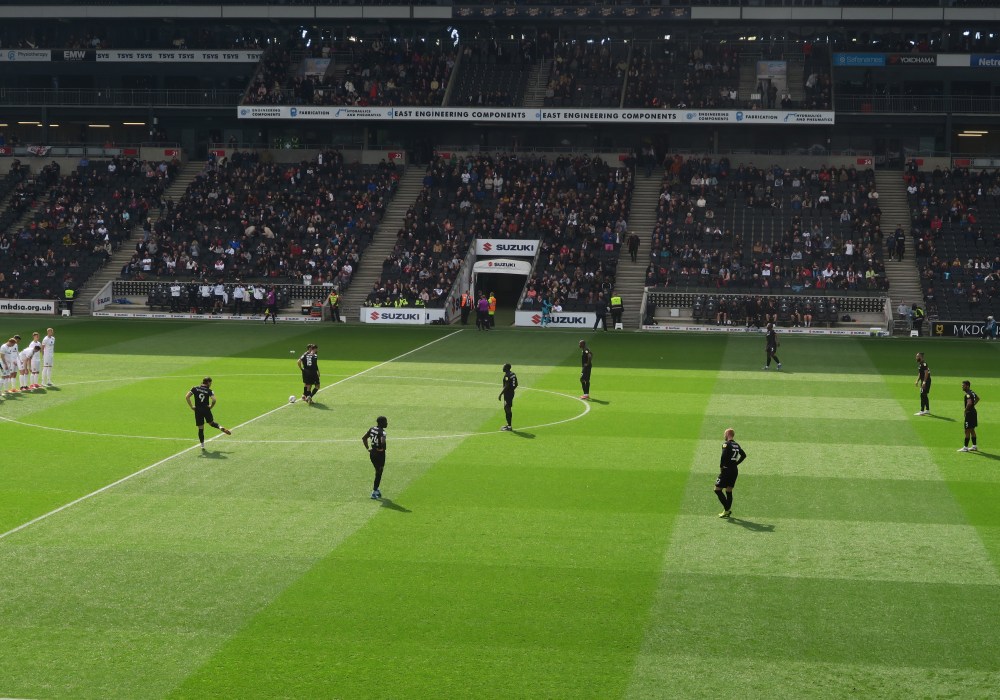
Waiting for the teams to arrive before kick off between Wycombe Wanderers and Plymouth Argyle on Good Friday, 15th April

A tough string of fixtures towards the end of the season has seen Argyle struggle in recent weeks, particularly a demoralising 2-0 defeat at fellow play-off contenders Wycombe Wanderers, but they will know that a positive result on the final day will give them a great chance of securing an unexpected top-six spot.

Saturday’s visitors to Devon, MK Dons, would have been among most people’s expected candidates for promotion before a ball was kicked this season. A mid-table finish in 2020/21 came after an excellent finish to the campaign under hot managerial prospect Russell Martin, who joined the Dons in 2019 and established a successful, possession-heavy approach.

After a big-spending summer, Martin walked out on the Dons on the eve of the new season, leaving the club in the lurch to join Championship outfit Swansea City. Despite being rocked by Martin’s departure, the Dons made a smart managerial appointment, hiring the previously unknown Liam Manning. Since his arrival, the Dons have steadily grown into promotion contenders despite needing to replace a number of important loan players and midfield star Matt O’Riley in the January window, something which could easily have de-stabilised the squad and undermined their campaign.

Although they too have stuttered in recent weeks, losing back-to-back games against Sheffield Wednesday and Oxford United, Manning’s Dons have really found their groove since Christmas, with the defeat against the Owls ending a run of 15 games unbeaten and being only their second loss since 11th December.

By the time these two sides meet next Saturday, some of the remaining issues could be all but settled, which could totally change the complexion of this fixture.

Whatever happens between now and then, both clubs have overcome adversity and unexpected challenges throughout the campaign and although their end-of-season emotions could swing wildly from delight to despair, they should both be extremely proud.

Barça Go On the Attack with Aubameyang

Adding Arsenal’s experienced attacker looks a risky move for the cash-strapped Catalans, who now look overstocked with forwards.

There’s an old saying that when a salesperson is struggling to get deals over the line, rather than cut back and let clients see that they are working hard to make ends meet, they should instead turn up to appointments with a flash new car and a sharp suit.

Barcelona appear to trying to live out this metaphor in a footballing sense, attempting to show the world that the financial challenges they have faced recently are no longer an issue; the enforced departure of the club’s greatest ever player, Leo Messi, just a fading memory.

Or as club President Joan Laporta explained it early in January after completing the €55m signing of Ferran Torres from Manchester City: “We’re definitely recovering our status. Everybody in the world should get ready, as we are back as big players in the market.”

But are they really back? Or is this just a show of strength and security that lacks the substance?

The Catalans’ winter transfer window opened with the signing of Torres to universal questioning about how they could afford such a deal with reported debts over €1bn and it closed with the recruitment of former Arsenal captain Pierre-Emerick Aubameyang, a capture which could be extremely exciting but does raise a few eyebrows.

Aubameyang has plummeted from favour at the Emirates, where disciplinary issues have seen him stripped of the captaincy and booted from the first team squad by increasingly tough Head Coach, Mikel Arteta.

That it has come to this for the French-born Gabonese striker is a huge fall from grace, with Arsenal cancelling his contract on deadline day to pave the way for a move to Barça yet continuing to pay a percentage of his wages, showing their willingness to get him off the books.

Rewind to 2019 and Aubameyang was a hot property, sharing the Premier League’s golden boot with Mo Salah and Sadio Mané. A year later, he was rewarded for a dazzling display in the FA Cup final against Manchester City with a bumper new contract in order to ward off the circling vultures.

With hindsight, that new deal resulted in something more akin to an albatross around the club’s neck, with performances rarely matching the reported £350,000 a week wage and Arsenal finding themselves increasingly finding themselves in a deja vu situation after the painful saga that was the disposal of Mesut Özil.

In that sense, Aubameyang’s move seems to suit the Gunners; theirs is slimmed-down, youthful squad built around the emerging talents of Bukayo Saka, Emile Smith-Rowe, Martin Ødegaard and Gabriel Martinelli; they are happy to take risks in attack and to counter with pace, making them engaging to watch and a genuine contender for a top four finish.

To achieve his approach, Arteta demands commitment and dedication, something that has been questioned before with Aubameyang before the final rupture in the camel’s spine when he failed to return on time in December from an authorised trip to France ahead of the cub’s clash with Southampton. The fall-out from that incident saw him lose the armband, his place in the squad and, finally, his manager’s support, making the ultimate departure inevitable.

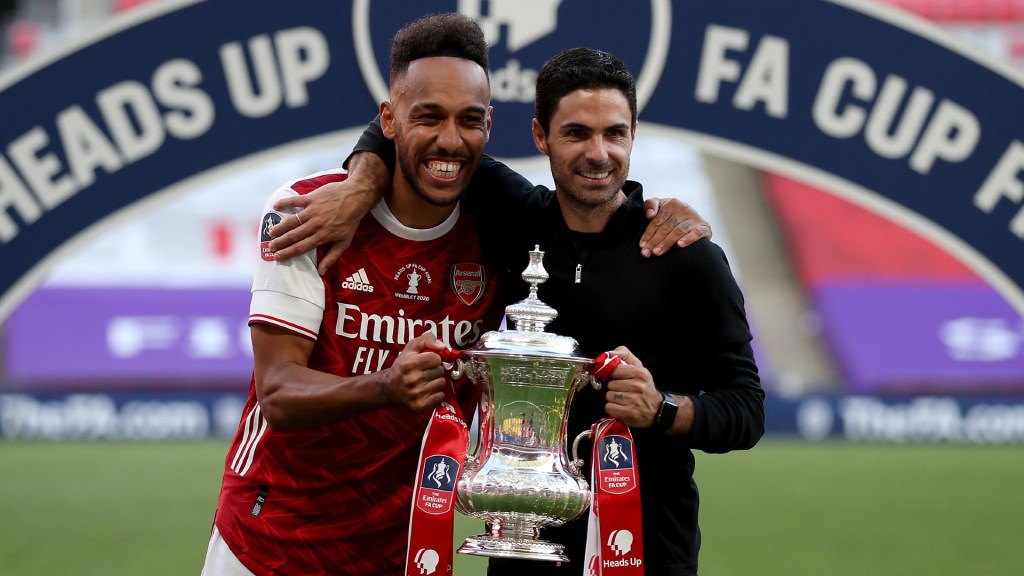
Better days for Aubameyang and Arteta: winning the FA Cup in 2020, when the forward’s match-winning performance earned him a new contract, which has subsequently proved hard for him to live up to.

However, there have to be questions about Barça’s decision to move for the 32-year-old at this time. Reports suggest that he has signed a contract until 2025, at which point he will be 36, but with a mutual break clause in summer 2023, which suggests that the Catalans may be spreading the cost of his contract over a longer period of time to essentially defer the impact on their budget – something that have also done with a new deal for French defender Samuel Umtiti.

Arriving as he did at the last minute of the window’s final day, Aubameyang’s move rounded off a busy month for Barça, who in addition to signing the former Arsenal man and Spanish international Torres, made moves for Wolves winger Adam Traore. This leaves the Blaugrana with something of a top-heavy squad – while Sergio Agüero’s enforced retirement has stripped them of his certain goals, this is a roster that already includes top class youngsters like Ansu Fati, recent recruits such as Memphis Depay and Luuk de Jong, plus the likes of Martin Braithwaite, who bailed Barça out of a hole when he joined a little under two years’ ago.

And then there’s Ousmane Dembélé – frequently injured, but mercurially talented and seemingly cast out for refusing to take a pay cut.

It’s hard to imagine how Barça can possibly accommodate all these forwards on a consistent basis, especially as they all seem to be suited to the styles of different coaches, having chopped and changed in the dugout in recent years – Xavi is the club’s fourth full-time coach since January 2020.

That instability is reflected in the club’s transfer strategy. This is a club that found itself like a kid in a sweetshop with a month’s pocket money when golden boy Neymar abdicated his status as heir to Messi’s throne and joined Paris St Germain, who met his €222m release clause in 2017 to make him the poster boy for the Qatar revolution.

That left Barça scrambling to replace the Brazilian, leading to a series of panic buys – Dembélé from Dortmund, Philippe Coutinho from Liverpool and Antoine Griezmann from Atlético Madrid all arriving for over €100m each. While all have shown flashes of the brilliance that dictated their transfer fees, none have been an unqualified success – Coutinho and Griezmann are both currently out on loan, while Dembélé looks to be running down his contract ahead of a lucrative ‘free’ transfer in the summer.

Those moves – and subsequent huge pay rises for established squad members – has left Barcelona spiralling financially; once a club that guaranteed success, in a certain style and based around promoting the very best academy prospects (they do have a very good crop coming through, it should be noted); they are currently a patchwork of players acquired under different coaches and regimes for what they can afford or account for creatively.

While Aubameyang’s form has taken a dip in recent seasons, finding the net on just 14 Premier League occasions in the last season-and-a-half, signing a player of his undoubted talent at a reduced salary and with no transfer fee is, on the surface, a smart move, but how exactly will Head Coach Xavi incorporate his particular role in the club’s system?

Barça is probably the most ideological football club there is, with the team’s possession-based style central to everything. For players to succeed at Camp Nou, the must be outstanding with the ball at their feet, operating in tight spaces and making perfect decisions.

Obviously Aubameyang is a smart, gifted footballer, but his game has always thrived with space in front of him to run into, darting onto angled balls between full back and centre half to spring a defence and finish regularly. Up against deep, packed defences who are happy to operate a low block, this kind of space is rare – will Xavi bend his style to suit Aubameyang or can the forward adapt to the Barça way?

Pidcock Powers to CX Title and Signals Superhuman Season

On the back of claiming the Cross World Championships, could cycling’s latest superstar now target the biggest one-day races on the road?

When Tom Pidcock crossed the line first in Fayetteville, Arkansas on Sunday to become the men’s world cyclocross champion, he confirmed his status as cycling’s latest superhero – and not just for the way he celebrated his victory.

By adding the rainbow stripes of world champion to his Olympic mountain biking gold, Pidcock has demonstrated superbly the talent he possess across multiple disciplines. A small, punchy rider who packs power beyond his frame, Pidcock has the potential to achieve just about anything in the sport.

Road cycling has already seen numerous elite talents cross over from CX in recent years, with Mathieu van der Poel and Wout van Aert being the standout names, but Pidcock has everything in his locker to compete with the titans of the sport for years to come.

And while MvdP and WvA may have been AWOL from Sunday’s race, Pidcock’s victory still came against a top-class field, all of whom were crushed by the Briton, unable to handle the ferocity of his attack with six laps remaining, and able only to follow his growing dust cloud carry away the top spot on the podium.

A prodigious talent from an early age, the 22-year-old from Leeds won the junior editions of world championships in cyclocross and road time trial as well as Paris-Roubaix, demonstrating his talent for the cobbles, something he may be hoping to repeat this spring.

He is now expected to line up in all the big one-day races in Belgium, Italy and the Netherlands in the first half of 2022, before featuring in Team Ineos’s eight-man squad for the Giro d’Italia in May for his first three-week Grand Tour.

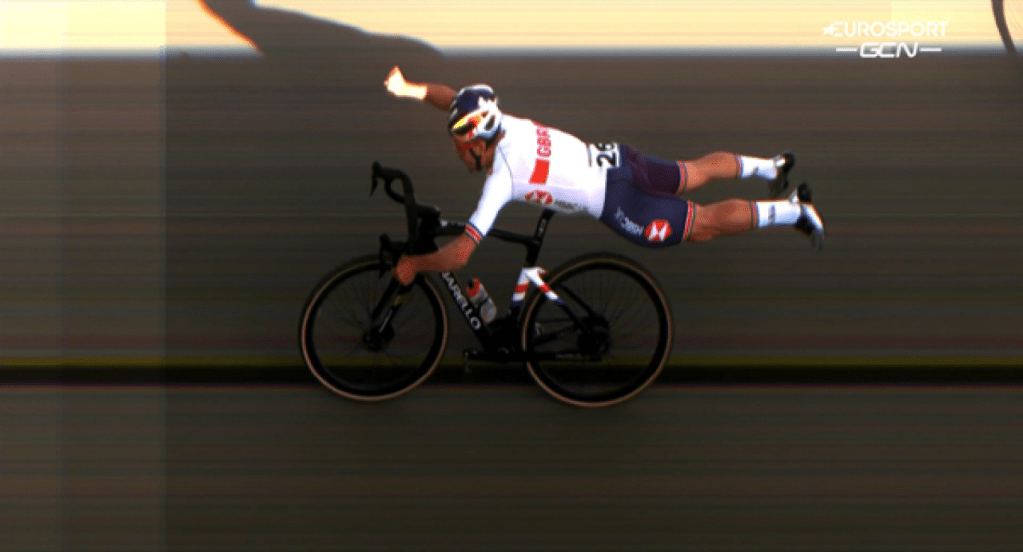
Tom Pidcock crosses the line in style to win the Cyclocross World Championship at Fayetteville, Arkansas last weekend

Going into that hectic spring classics campaign, Pidcock will be confident of going head-to-head with the sport’s established big names, with van den Poel and van Aert joined by the likes of road World Champion Julian Alaphilippe, 2021 Tour of Flanders winner Kasper Asgreen and a man seeking to rediscover his mercurial best, Peter Sagan.

However, with just one win in the pro road ranks to his name, for Pidcock to instantly succeed in the biggest races would still be a surprise to many.

In a potentially strange twist of fate, a horrific crash and subsequent injuries suffered by Pidcock’s Ineos team-mate, Egan Bernal, could ultimately provide the Briton with a boost to his chances of springtime success.

While Pidcock was crushing his CX foes in Arkansas, 2,500 miles away in Bogotá, Colombia, Bernal was recovering from a shocking accident during a training ride that left him in need of multiple surgeries to his spine and, at one point, given a chance of less than 5% of recovering full mobility.

Clearly the priority for Bernal is making a full recovery from his injuries, which also include a broken thighbone and kneecap, before attention turns to his future cycling career. In the short term, his season is essentially over, meaning that Team Ineos will need to pivot their approach to the campaign.

Since arriving on the World Tour scene in 2010 as Team Sky, the outfit led by Sir Dave Brailsford have enjoyed massive success in the sport’s 21-stage Grand Tours, spearheaded by Tour de France wins for Bradley Wiggins, Chris Froome and Geraint Thomas as well as further success for Froome at the Vuelta a España and Giro d’Italia, where Tao Geoghan-Hart and Bernal have also taken the top step of the podium in 2020 and 2021 respectively.

However, in the big one-day races, the sport’s Monuments, Sky/Ineos have struggled to repeat that kind of success, with only two wins coming their way to date with victories for Wout Poels at Liège–Bastogne–Liège in 2016 and for Michał Kwiatkowski in 2017’s Milan-Sanremo.

Arguably, the team’s focus on winning the biggest stage races, including multiple training camps each season at altitude and ensuring their Grand Tour teams are packed with incredibly talented riders in service of their selected leaders, has potentially diminished their chances of winning more Monuments.

There have still been huge one-day wins for the team – particularly Kwiatkowski, with wins at E3 Harelbeke and Strade Bianche in addition to finishing first in Sanremo – but a squad of their depth and talent could and should have secured more consistent successes to their collective name.

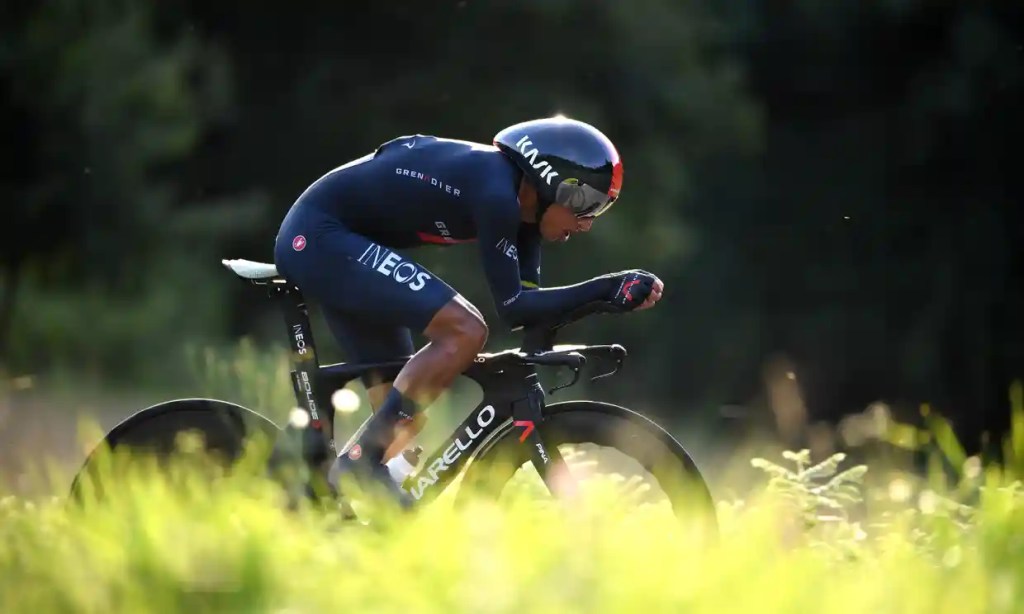
Team Ineos rider Egan Bernal, who suffered a horrific crash during training in Colombia recently

Bernal’s injuries leave the team’s plans for the coming campaign in tatters, with no obvious replacement for the Colombian in terms of climbing ability or General Classification talent – while they might expect Thomas or Richard Carapaz to be able to step up, they surely are some distance from being able to challenge current double Tour de France winner Tadej Pogacar.

Which presents something of an opportunity for the squad to take a different approach and re-focus elsewhere in the season. When Geoghan-Hart won the Giro in 2020, it came as a surprise, clinched as it was on the final stage time trial into Milan. After the dust had settled and the Maglia Rosa awarded, Ineos boss Brailsford reflected on the way that race was won and how it could herald a new, attacking style of cycling for the team: “We’ve done the train. We’ve done the defensive style of riding and we’ve won a lot doing that,” he said, to velonews.com.

“But it’s not much fun, really, compared to this. What we’ve done here, the two Giros we’ve won. First with Froomey’s win on stage 19 [i.e. back in 2018] and the way all of the guys raced here, well, at the end of the day, the sport is about racing.

“It’s about emotion and the exhilaration of racing. And that’s what we want to be now.”

That new approach, taking races by the scruff of the neck, has yet to be seen unequivocally, despite Bernal’s success in the 2021 Giro where the Colombian was never really threatened after taking the pink jersey on stage nine and ultimately winning by a margin of 1’29” from Damiano Caruso.

With Bernal yet to begin his rehabilitation and recovery from breaking as many as 20 bones in his crash, Ineos could completely shift their approach to the 2022 season, throwing additional resource behind a committed bid for wins in Flanders or Roubaix.

Riders such as Kwiatkowski, Luke Rowe and Dylan van Baarle are outstanding competitors with immense pedigree, but who are often saved for deluxe domestique duties with training plans designed to peak around the Tour de France in July. Allowing them to ride off the leash could be a major headache for perennial classics big boys, Quick-Step Alpha Vinyl.

Combined with up-and-coming superstars like Pidcock, Italian powerhouse Filippo Ganna and reigning track Omnium world champion, Ethan Hayter, Ineos have the basis for team that could rival the best in the world.

While van der Pool continues to nurse a back injury from last season and van Aert potentially targets goals as far ahead as the Tour’s Green Jersey classification, this year could be the perfect opportunity for Pidcock to step into the vacuum created and grasp the opportunity it creates.

Targeting the sport’s biggest single-day events wouldn’t be easy as anything can happen on a single day, but with the way he demolished the opposition in Arkansas, cycling’s newest Man of Steel has proved that he has what it takes in the biggest races on the biggest stages.

Glory on the Roubaix Cobbles Confirms Deignan’s Place Among the Very Best

By claiming victory on the first ever Paris-Roubaix Femmes, Britain’s Lizzie Deignan added another historical page to her incredible career story thanks to one of 2021’s stand-out sporting performances.

Paris-Roubaix is arguably the jewel in cycling’s one-day race crown; it features unrivalled spectacle with the mud or dust (depending on the weather), the brutal cobbled roads and the iconic finish in the Roubaix velodrome.

2021’s edition of the race was its 118th, showing the incredible longevity and tradition that this runs through the soul of this event, one in which is held in the greatest of esteem. Which begs the question – why did it take so long for there to be a female version?

After pandemic postponements in 2020 and spring 2021, Saturday 2nd October saw professional female cyclists finally given the opportunity to tackle the race known as the Hell of the North, breaking down yet another anachronistic barrier perpetuated by sporting patriarchy.

Recent editions of the Women’s Tour, Giro Rosa and Ronde van Vlaanderen have shown that female cycling is, in its own way, equal to or greater than its more established male equivalent in regards to action, excitement and certainly unpredictability. In many ways, as women’s cycling continues to develop in terms of professionalism and organisation, it avoids much of the structure and regimentation that makes male cycling often predictable.

As an event, Paris-Roubaix is best known for the cobbled roads and tracks which make it the ultimate test of strength and endurance. Being the first female edition of the race would add to the element of unknown, as even though the riders and their teams could have carried out plenty of preparatory training rides to understand the characteristics of the surface, there’s no substitute for actually riding in race conditions and handling the fatigue that comes from this kind of situation.

While the topography of this part of France may lack the long, torturous mountain passes of the Alps or the leg-burning gradients of neighbouring Flanders, there is nothing quite like the draining effect of riding through wind, rain and mud combined with the repeated efforts of surfing the cobbles, where each contact with the ground feels like being punched through your front wheel.

This first edition of Paris-Roubaix for female riders would always hold a place in the record books, with whoever won forever being the first winner, but that it should be Britain’s Lizzie Deignan who stood head and shoulders above the other 128 riders was testament to her steel and resolve to continue what has already been a glittering career.

With a total of 17 cobbled sectors on the menu for the riders, it must have come as a surprise to the vast majority of the incredibly strong field, featuring star names such as Marianne Vos, Chantal van den Broek-Blaak, Kasia Niewiadoma, Annemiek van Vleuten, Lotte Kopecky and Lisa Brennauer, when Deignan launched her attack, solo, with over 80km to go and not a single cobblestone traversed.

Moves of this nature are often doomed to failure, with the chasing riders able to work together in order to either prevent a significant lead being built or to allow the breakaway enough licence to accrue a margin, yet never being in danger of losing the race altogether. For a rider to win by way of a long range solo attack is surely among the most revered of sporting successes; the ultimate demonstration of courage, commitment and determination by effectively taking on and beating everyone else. One versus 128.

However, perhaps because of the course or maybe the wet and muddy conditions which saw many riders hit the deck and either lose time, motivation or both, Deignan was able to steadily build and hold a lead of over two minutes, while the field behind her whittled down to just a select few.

Into the final 20km, with the riders’ bike handling skills under stress being increasingly tested, it was perhaps the greatest competitor of them all, Vos, who struck out to try and reel in Deignan, both to eviscerate the remaining chasers but also to make what she hoped would be the winning move.

The race became a classic cat-and-mouse chase, with the Dutch superstar gradually eating into the British former World Champion’s cushion. It was impossible not to keep one eye on the clock, counting down the remaining KMs while also taking in the suffering of both riders, digging increasingly deeper to either hold on or break through. This was attack versus defence in cycling form; a nervy head-to-head, yet one where the two opponents were roughly a kilometre apart and unable to look each other in the eye.

Moments like this are among those which make road racing such a captivating sport. In a race which takes roughly three hours, it’s these periods of action where the outcome is completely in the balance that make this kind of endurance event enduring. Both riders on the rivet, giving everything to try and win the race, to take a unique place in the sport’s history, knowing that the tiniest lack of concentration or something totally out of their control, could derail their effort and hand victory to their rival.

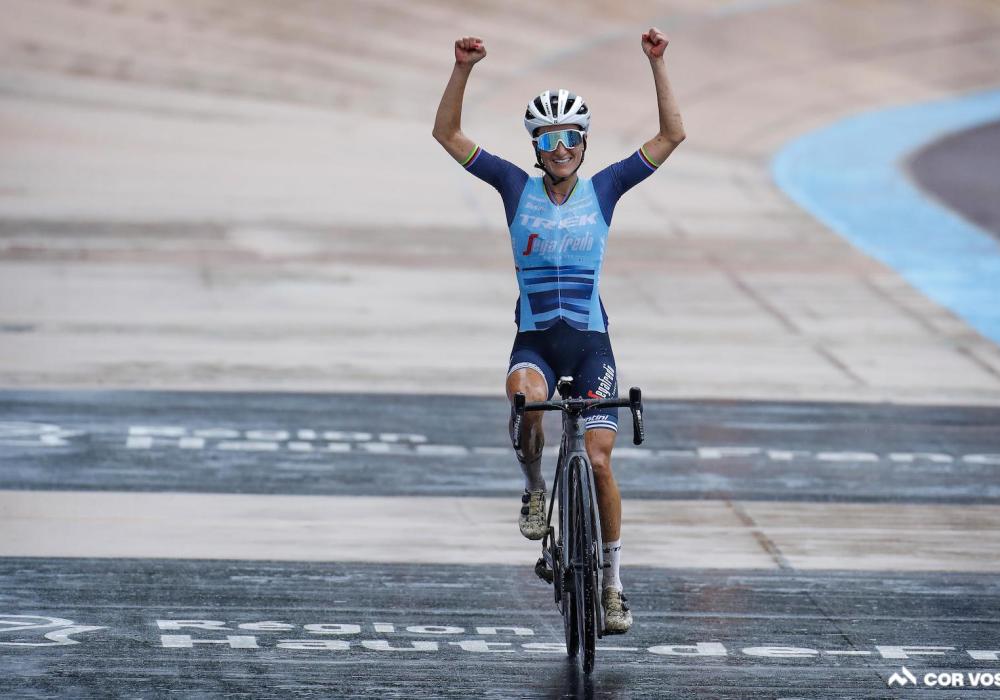
Deignan dug in, keeping Vos at arm’s length and reached the velodrome on her own, able to enjoy the final KM as a victory lap-and-a-bit. Crossing the line and raising her arms in victory gave perhaps the final insight into the effort it took to win this race, known as the Queen of the Classics, showing blood running from open blisters on her hands, worn down by the vibrations through her handlebars. Despite this, her grip never faltered, either on the bars or on the race, as she deservedly became the first ever winner of the Paris-Roubaix femmes.

This was a performance of the ages, one initiated with bravery and audacity but maintained through guts and a refusal to give in. It was fitting of the occasion and history it would create that the inaugural women’s Paris-Roubaix should end this way, with the riders spent physically, faces covered in mud and a field split to pieces, adding to the gravity and spectacle of the event.

Long may Lizzie’s win be remembered and celebrated as a landmark in cycling and female sport.

Spurs Trio Send a Message to Conte in Impressive Liverpool Performance

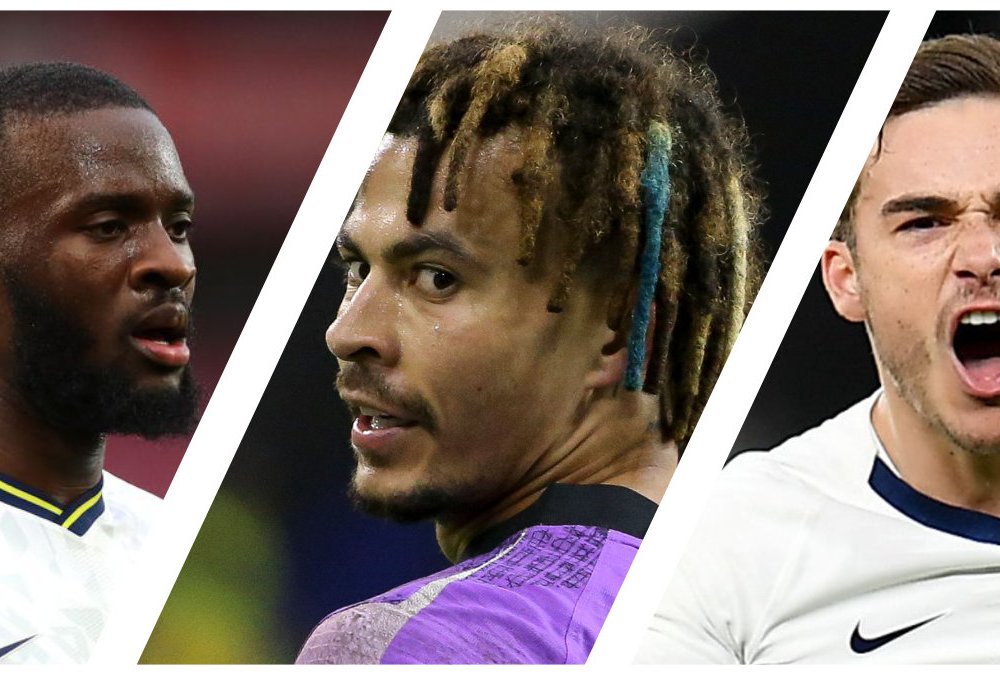
Whether it was by luck or design as a result of contending with a flurry of Covid cases in his squad, Tottenham manager Antonio Conte made a series of changes for the Premier League clash with Liverpool at the weekend, with Dele Alli, Tanguy Ndombele and Harry Winks returning to the side after respective spells on the sideline.

All three turned in strong performances and sent the Italian coach reminders that their futures might be in North London after all despite persistent rumours suggesting they might all be headed for the exit in the upcoming January transfer window. 

In a game that was played out with little in the way of a settled pattern or structure, ultimately resulting in an action-packed 2-2 draw, Spurs took the lead through another player looking to send a reminder of his talent, Harry Kane, after an excellent through ball from Ndombele.

The Frenchman is the definition of a mercurial talent; one who arrived at White Hart Lane in the summer of 2019 while Mauricio Pochettino was still in charge. Including the Argentinian, Spurs are now on their fourth full-time manager since Ndombele’s arrival and it is arguable that none of those bosses have been able to coax his best performances out on a regular basis.

A player who, when at his most confident and secure, can be a wizard on the ball, conjuring tricks and skills to occupy a dozen YouTube showreels, Ndombele may be stifled by the pace and physicality of the Premier League, although his successful time in France with Lyon and Amiens, where the game is hardly pedestrian, would suggest otherwise.

What seems more likely is that a player and character who thrives on freedom and being given space tactically to express himself is finding the transition to structure and discipline to be difficult, unsurprisingly. This is further exacerbated when you consider that his full-time bosses at the Lane include Jose Mourinho and Nuno Espirito Santo, two managers who prioritise the collective and solidity over individuality and expression.

Whether or not Conte can find a role that suits Ndomble will be pivotal to how his spell with the club plays out, as shoe-horning him into a hard-running, up-and-back midfield duty looks unlikely to get the best from him – especially when there are others in this squad capable of doing that particular job to a higher level.

Alli, meanwhile, has been the Premier League player most consistently linked with a move to Newcastle United, with the newly-rich Mapies rumoured to be keen on just about any player not holding down a regular place in their current side.

After exploding onto the League One scene in 2011 with his local side, MK Dons, including an eye-catching performance in a 4-0 win over Manchester United in the League Cup, Alli rapidly ascended to exulted levels, lighting up the Premier League and the Champions League at the heart of Pochettino’s energetic Spurs team.

He seemed to be a perfect, modern footballer – equal parts athletic, technical and creative with an eye for a goal and a keen sense for a late run into the box. His footballing relationships with Kane and Heung-Min Son were devastating for opponents and endearing for Spurs fans as he quickly became something of a darling for the White Hart Lane faithful.

Standout moments for Alli in his early Spurs days were a spectacular goal against Crystal Palace where he juggled the ball before turning and volleying home and a brace in a 3-1 win at Chelsea, the club’s first success at Stamford Bridge in 28 years. He collected the PFA Young Player of the Year Award in 15/16 and 16/17, becoming only the third player to claim the trophy twice in succession since its inception in 1974 and a strong showing in the 2018 World Cup sparked rumours of a possible move to Real Madrid.

However, after signing a six-year contract in 2018, Alli’s career has somewhat stalled – under Mourinho, he struggled to nail down a regular place in Spurs’ starting eleven, with the Portuguese manager feeling that he wasn’t a midfield player but seemingly not trusting him enough to find a place for him in attack.

Despite making 38 appearances in 18/19 and 19/20, Alli had drifted into something of a peripheral position at Spurs and only featured in 15 Premier League games in the whole of 20/21, a season which saw Mourinho’s side initially start well before fading badly after football’s restart following the suspension for Covid. If anything, Alli made more headlines that season for his on-screen dealings with Mourinho during the Amazon All Or Nothing documentary than for his on-field performances.

This campaign started promisingly for Alli, with Nuno finding a regular role for him in a deeper midfield position, but by the end of October there was frustration on both sides, with the former Wolves manager eventually omitting him from his matchday squads.

In the end, somewhat predictably, things didn’t work out for Nuno at Spurs and the former Porto goalkeeper was relieved of his duties after just four months in charge, making way for Conte’s arrival in November.

The Italian coach is known for playing a 3-5-2 or 3-4-3 formation where hard work and sacrifice are key, suggesting that it might be difficult for Alli to find a place – however, there were similar thoughts around another player with Spurs connections, Christian Eriksen, during the 20/21 season at Inter Milan. Conte was thought to not be a fan of the Danish playmaker, to the point of looking to offload him in the January transfer window. However, Inter’s owners insisted that the former Juventus boss should play with the toys he already had before any further additions, and after some tactical tinkering, Eriksen played a central role in the Nerazzuri claiming their first league title in a decade.

Against Liverpool, Alli showed the kind of verve and intelligence that makes him a dangerous player for Spurs, joining rapid breaks to either create opportunities for others or find himself in position to take chances himself – in fact, it was only an excellent save from the Reds’ ‘keeper Alisson that denied Alli from doubling his goal tally for the season.

If Alli could return to something like his form of 2016, 17 or 18, then Spurs would have an outstanding player on their hands, capable of match-winning moments on the biggest stages. Remarkably, he is still only 26 years old, so to write off a player of his undoubted talent would be a huge waste and one that could come back to haunt Spurs if he were to join a rival Premier League club.

Winks, meanwhile, is perhaps a player who has yet to find his place or to reach his peak. A busy midfielder who connects play and shuttles the ball to different areas rather than springing open defences with splitting passes, Pochettino described him as being in the mould of Barcelona icons Xavi and Andrés Iniesta, which might seem like lofty praise, but indicates his disposition as a contrast to more physical athletes in the squad at the time like Victor Wanyama or Moussa Sissoko.

Fast-forward to 2021 and Winks remains with Spurs while many others in midfield have moved on. At the same time, the club have shelled out on the likes of Giovani Lo Celso, who operates in similar spaces to Winks, reducing his opportunities to hold down a place in the side.

His role in a team is probably more along the lines of a deep-lying playmaker, attracting the ball from his team-mates in defence and then recycling possession before creating space for others to catch the eye further up the field.

Players like Winks have often struggled in the English game, where pace, power and getting stuck in will always be favourable characteristics. This is perhaps best characterised at Spurs by the arrival of Pierre-Emile Højbjerg, who has seemingly secured a regular place through a combative and industrious approach to the game.

The issue for Winks is that it is hard to imagine him being a regular starter for any of Spurs’ rivals; that said, against Liverpool he played an important role in Spurs’ midfield and demonstrated that he is more than capable of mixing it with the likes of Naby Keita in the Reds’ midfield.

This season he has only appeared in five Premier League fixtures, but if he can show more of the kind of performance he put in against one of the League’s best sides, there’s no reason to think he shouldn’t feature in Conte’s future plans.