The clamour for further decreasing the length of sporting events to fit busy scheduling demands and appease decreasing attention spans has taken something of back seat in recent weeks with longer form events and sports roaring back into the collective conscience.
At the risk of sounding like someone’s dad, the increasing appetite for shorter and shorter representations of sport to supposedly satisfy the YouTube generation of spectators seems to be continually gathering pace. More and more sports and their organisers seem to be exploring ways of creating their own version of cricket’s Twenty20 format, reducing longer encounters to action-packed face-offs designed to appeal to casual viewers.
However, this summer has seen the extended, more traditional versions of sports making waves and demonstrating that it really can be worth investing time and attention to the slow-burn drama and tension that builds through time in the action.
Headlining the re-awakening for the longer sports was the Cricket World Cup Final on Sunday 14th July; an incredible, scarcely believable rollercoaster of a game, which genuinely could have swung either way on numerous occasions but ultimately resulted in a win for England over New Zealand by way of a Super Over – who even knew that was a thing?
Admittedly, the World Cup itself is not the longest form of the game, nor the perceived ‘true’ format of cricket, a title which is held by the five-day, test version, but it was nonetheless refreshing to see the 50-over, day-long variant of the sport making headlines around the world rather than the TV-friendly Twenty20 setup.
It’s easy to understand why short form cricket has steadily taken hold and, in some ways, become the prime format of the game. It fits nicely into schedules, competing with sports like football and rugby which don’t require a full day’s time to achieve a result This definitely makes it a more appealing package in terms of promotion and marketing, taking all the most exciting and dramatic moments from a match and concentrating them into a handy, three-hour package.
This has the further advantage of levelling the playing field somewhat – it should come as no surprise that while the big three in international cricket – India, Australia and England – continue to dominate the test arena (and the financial rewards that come from it), there is a far greater chance of success for historic powerhouses such as South Africa or the West Indies, who find it increasingly difficult to compete in the longer formats.
Nestled neatly in between the two extremes is the 50-over format, the World Cup of which came to England this summer and culminated in that final at Lord’s in July.
The match itself may not have been the anticipated all-action classic, with low scores on both sides and a focus on preventing free-flowing, aggressive batting with pragmatic, safety-first bowling. On the surface, that hardly seems like the recipe for high drama and an unforgettable outcome, but as it turned out, the drip-drip nature of the play only added to the tension of the occasion.
When it feels as though not a great amount is happening on the surface, the moments of action, arriving like bolts from the blue, become even more dramatic when they do arrive, adding to the excitement and joy for the spectator.
While the cricket creeped towards its frankly ridiculous outcome, another ubiquitous summer sport was toiling away on a different channel, seeking its own share of the spotlight. Across London from the Lord’s cricket ground, the men’s singles final of Wimbledon saw two of tennis’s all-time greats, Roger Federer and Novak Djokovic, going head-to-head once more.
The match ultimately finished three minutes short of five hours, making it the longest ever Wimbledon final, with Djokovic eventually claiming victory over Federer by way of the competition’s first final-set tie break in the championship match, with the scores level at two sets all and 12 games each in the fifth.
This was another encounter that looked like it could could easily go either way. Federer undoubtedly enjoyed the greater support on centre court, but Djokovic’s ability to stay in the tie and actually lead 1-0 and 2-1 on sets, despite being second best for much of the play, demonstrated why he too is one of the game’s most successful players and a serial winner.
Trying to watch the cricket alongside the tennis was almost impossible; flicking over to Wimbledon to check the score repeatedly led to complete engrossment for an extended passage of play, before switching back to the cricket, only to learn that a wicket had fallen or a six clubbed into the grandstand.
This experience highlights one of the factors that makes long-form sport so encapsulating. In the 21st century, this could be described as FOMO – fear of missing out – something cycling’s biggest three-week party, the Tour de France, demonstrates perfectly. In amongst the epic, six or seven hour tests of endurance are sometimes tiny moments of drama that populate the six-minute YouTube highlight reels later in the day.
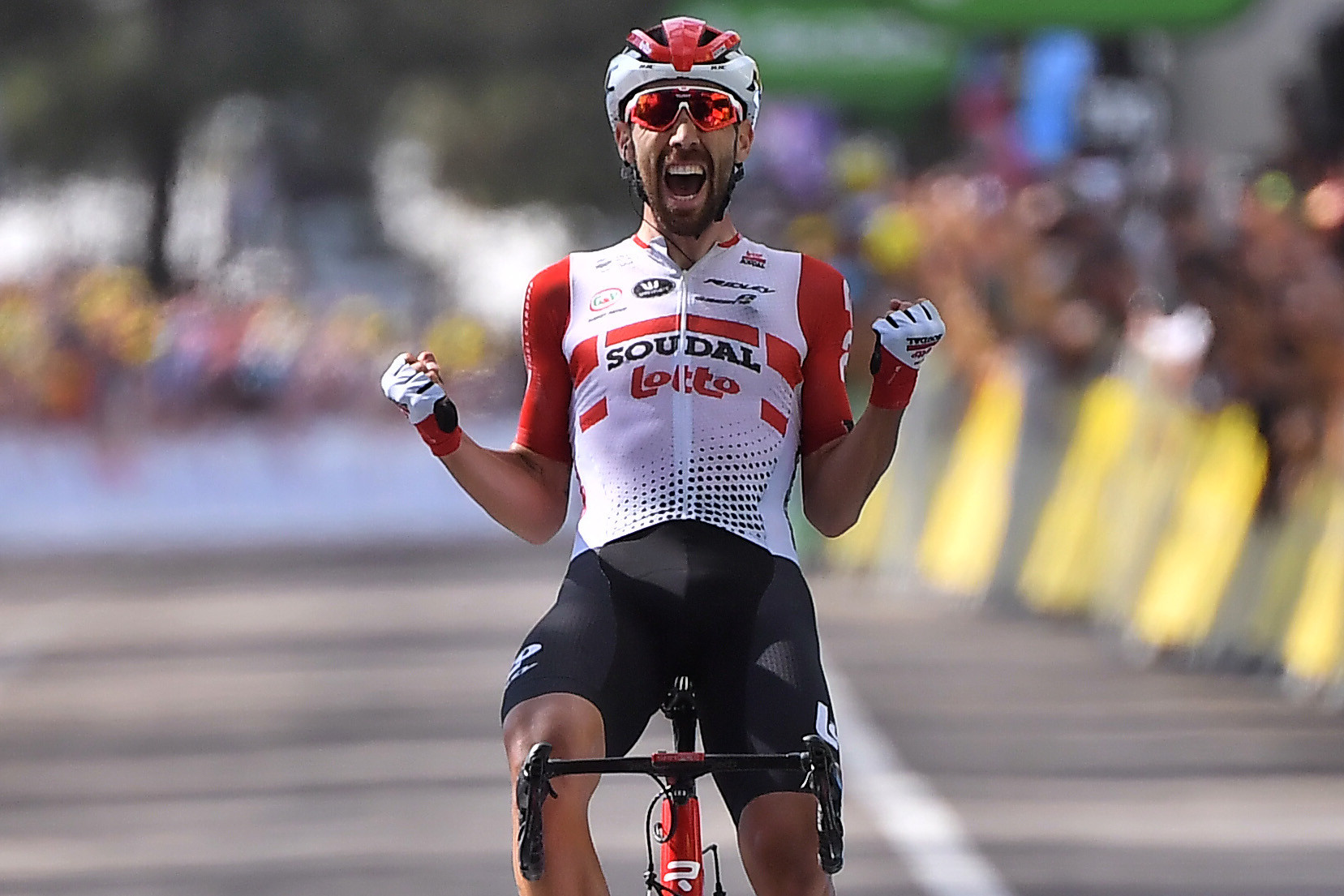
Perhaps the best example of this came on stage eight of the Tour, a hilly parcours taking in 200km from Macon to Saint Etienne. Eventual winner Thomas De Gendt took a shade over five hours to reach the finish line, having originally led a four-man breakaway group from the off before eventually grinding down his fellow escapees to take victory.
Back in the main pack, surprise race leader Julian Alaphillipe, who would go on to make headlines for his swash-buckling defence of the yellow jersey, re-claimed the overall lead of the race after attacking the main group of favourites in the final kilometres, joined by fellow Frenchman Thibaut Pinot, who effectively staked his claim for the overall win.
Coming right at the end of a long day where, to the uninitiated, nothing much was happening, this moment of action created a frantic, pulsating finish to the stage, as heroic breakaway artist De Gendt dug deep to claim the day’s win and hold off the two home heroes. Watching the gap ebb away on the TV broadcast was unmissable viewing, with multiple questions to be answered before the day was out – would De Gendt claim the deserved win? Would Alaphillipe re-capture the overall lead? Did this mean that Pinot was the most likely to claim overall victory in the remaining stages of the race?
As it turned out, this was just a skirmish in an ultimately classic war – further highlighting the difficulty of condensing three week’s action into a single package and the joy of following the theatre throughout its entirety.
There is a lot to be said for the accessibility of taking sport’s best bits and presenting them in a way that appeals to a wider demographic. Expecting everyone to want to sit down and commit to hours and hours in front of a TV screen or in a crowd might be a thing of the past, creating an understandable fear of declining audiences and reduced advertising revenues as a result.
However, protecting the extended formats of sporting occasions remains essential to maintaining their significance, and hopefully 2019’s rise of the longer occasions will go someway towards stemming the tide of further T20-ising among sport administrators and marketers.
 sixteeneightyone